People Skills vs Technical Skills: Which Are More Important? w/ Benji Pow
Salon Sales & Wellness Educator @BenjiPow helps salon owners with their communication skills and sales confidence.
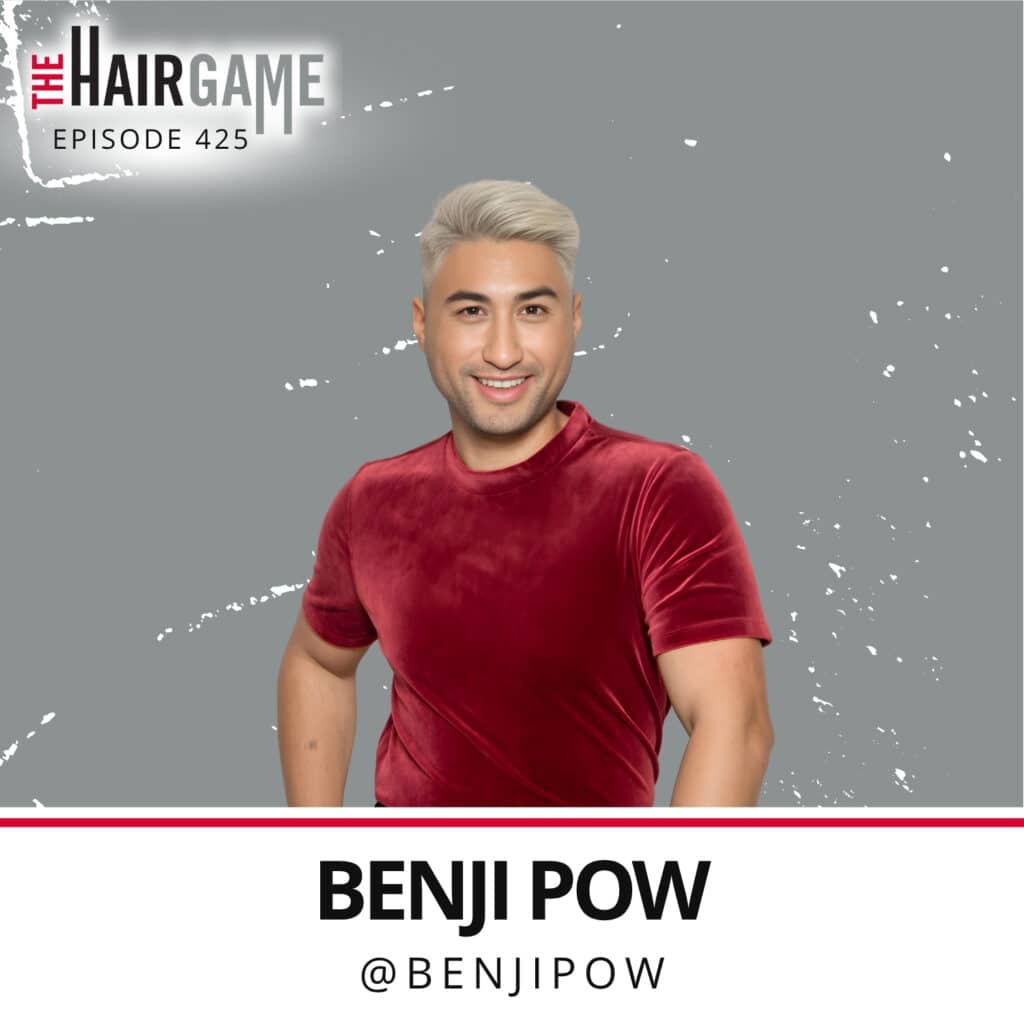
Salon Sales & Wellness Educator @BenjiPow helps salon owners with their communication skills and sales confidence. We discuss the importance of technical skills vs. people skills, various aspects of salon management, and the difference between coaching and mentoring. Benji also shares insights on overcoming limiting beliefs and the importance of aligning values within a salon team to foster a positive work environment.
The Hair Game (00: 00)
Hey Benji, how's it going?
Benji Pow (00: 02)
Hey Eric, I am doing actually really good. Thanks for asking.
The Hair Game (00: 05)
Fantastic. Benji's wearing a very comfortable looking red velour. Is that velour or velvet?
Benji Pow (00: 12)
It's, it's velour. It's a velour
t-shirt. I got a couple of them in a couple of colors, especially for the holiday season. Everybody is so tactile and they're like, ⁓ can I touch? Yeah. Yeah. It's good for the good to, you know, entice clients to get more festive with what they wear. Yeah.
The Hair Game (00: 17)
yeah.
yeah, we're getting into the winter season. need tactile clothing.
I like that. I like that.
And we're going to talk a lot about enticing clients today, aren't we?
Benji Pow (00: 39)
Yeah, for sure. Yeah, there's so much that stylists can learn and level up their skills with this topic that we're going to talk about.
The Hair Game (00: 47)
So for the listeners who don't know you, Benji, you're a coach to beauty professionals and salons. You help them perform better behind the chair, not technically, but I guess interpersonally.
Benji Pow (00: 59)
For sure, that's exactly right. You did your homework. I like that.
The Hair Game (01: 02)
Yeah, I did my homework. I did my homework.
One of your quotes that I like the most is that you believe people skills is the number one retention strategy. And you do all this by focusing your training on the right kind of communication. ⁓ Whether it's communication with the clients when it comes to, you know, what kind of service experience you're delivering or…
Benji Pow (01: 18)
Yes.
The Hair Game (01: 26)
communication in a salon team. If it's a salon owner that has people working, you know, underneath them, management communication is super, super important to survive the trials and travails of business. So why don't we start with where you're from and how you got into this in the first place.
Benji Pow (01: 46)
Yeah. Well, I am here in San Francisco. I'm originally from Hawaii. And so I've been in California for the last 17 years and been in this industry for the last 17 years. And I got here because I hadn't managed and owned a salon in San Francisco the last five years. I currently, a, I rent a chair and so I stopped with management. had at the time 16 stylists and then plus or minus through the pandemic down to about 11.
And that's where it all began. You you get thrown into management and you get thrown into managing other people and managing emotions and everyone else's ⁓ life that's lifing for them, right? And you just kind of need to, as a manager and as a leader, really gain control of how to lead your team properly. And it all comes down to how you're communicating, how you're communicating with the group collective.
And then how you're communicating with each individual person. And in each moment, it's crucial. It's crucial to get across what you are trying to do as an owner, as a leader, as a stylist, and really listen to them on seeing and hearing what they need in order to get to a resolution or get to the next step. And so that's where my training began. I've taken a lot of
management workshops and personal growth workshops, a lot of classes and courses, therapy, like that's a whole, a whole thing. And it, that's where everything started. And I realized that in management that when everyone's coming from all walks of life and experiences and all parts of the world, and especially in San Francisco, it's kind of a melting pot and everybody wanted to come to the city at one point. And so people are just coming, coming to the city and you get to really know, ⁓
each other's backgrounds and their upbringing. And, and then you get to really know them personally because you're working with them just as much as you are living with the people at home. And so you get to know them personally and you kind of figure out like, okay, these are some challenges that they've had for a while. These are some triggers, even if it's just asking for help unfolding the towels, you know, these are some trigger words and trigger actions. Like how do I navigate this and make money?
because we all are here in this industry to make a living. And that's a short story long of where I've got to now like really getting passionate about working with people and just having conversations about their experiences and having conversations about what to do next in order to get to the next level, grow their business or gain an opportunity.
The Hair Game (04: 30)
Right? I wanna start with retention, the importance of retention. It's one of these things we don't talk about a whole lot. We talk about finding new clients all the time. Everybody's always talking about how to find new clients. And of course, that's very, very important. But you don't need to find as many clients if you retain the ones you have, right?
Benji Pow (04: 52)
Yeah.
The Hair Game (04: 52)
if you retain the
Benji Pow (04: 53)
Yeah.
The Hair Game (04: 53)
one that's in your chair. So first of all, do you have any numbers or any idea of what the average retention is?
Benji Pow (05: 04)
The average, well, we, in my salon, know, we have, every salon has their way of metrics and KPIs. And so the top lead stylist would, in my salon, would retain at least 70 % of their clients. And this is like over the course of, I would kind of monitor every quarter and then every year. And I don't know the salon average.
If you have those numbers, I would love to hear it from you.
The Hair Game (05: 33)
Well,
you know, I was curious if you had anything. I have, I've heard things from different sources. It varies a lot. And I almost don't wanna say anything because I think it depends a lot on the type of service that's being delivered. I mean, are we talking about a barber, you know, $25 per cut barber? Are we talking about somebody who does great coverage? You know, I think it's a lot.
different ⁓ by service provider. ⁓ But it's not as high as the listeners are probably assuming. I think that's the one takeaway when I've heard different numbers, it not as high. So how do we improve it? Okay, it doesn't really matter so much what it is, but how do we improve it? And you seem to have a pretty good idea of how we improve it.
Benji Pow (06: 24)
Yeah, yeah, it, you you're only as great as the company you keep. And that goes for your friend groups, and it goes for the clientele that you attract. how you connect with people and how you build relationships will build your network. And I learned this yesterday at a hair event that I was at in Oakland, and your network…
equals your net worth. And so with that, you know, the types of clients that you can keep, the types of clients that you can get to come back to you is going to fill your cup. It's going to be your bread and butter. Those are, those clients are going to be the ones who are wanting color every six weeks to 12 weeks who want extensions and their move-ups every six weeks to 12 weeks. So these are like your bread and butter, your haircuts that come every quarter. And you know, it, matters on how you.
connect with them and how you build relationships with them because people want to be around people who are like themselves. And if you're not connecting with them, they're going to go to another salon where they have that connection, where they have that conversation that really drives them. it can, whether or not you want to talk about the housewives or you want to talk about science, you know, like you really have to find your, your tops of topics of conversation and really learn how to
learn about other people's interests too and expand your knowledge and your conversations around them. that's one of the main things that you can do. This is big picture, is just having the right conversations. All it takes is the right conversation to really gain someone's interest and interest in you and interest in the topic and interest in coming back and sharing more time with you.
The Hair Game (08: 14)
So these are people skills that we're talking about. These are not technical skills. And
Do you think people skills are more important than technical skills? You know, as you're building a business behind the chair and you're, you know, you need to retain your clients.
Benji Pow (08: 34)
I, here's how I'm going to answer this question. You can make money as long as you know how to sell. You know how to sell yourself. You're confident in yourself. You're confident in getting someone to agree with you and get to the end results. Now you can make money if you aren't the best hairstylist in your salon. You can still make money. You can still sell product.
You can still make someone feel good and get connected with them. You can still find common interest and common ground. And if that person is so connected with you and they like you as a person and your haircut is just like 60%, they're still going to take your opinion. They're still going to say like, I enjoyed your time. my God, you're such a great person. They're still going to like you. And so with that, you could still make a sale. You can still get them to return to the salon.
You may not get them to return to you over a course of however many haircuts, bad haircuts you give, you know, but you could still, you could still make money. Now I'm not saying that you can be a bad hairdresser because if we need to raise the bar and these, this is what the podcasts are about. And so that's what I'm saying is you can make money. Even if you don't have the technical skill, you, there's so much resources out there where you can elevate your skills and.
The Hair Game (09: 34)
Well, yeah.
You're right.
Benji Pow (09: 57)
and make it to a point where you can charge a certain amount of money.
The Hair Game (10: 00)
And then once you have that kind of the certain sufficient level of skill to give the client what they want, then it's all about people skills, right? So sometimes I like in order to kind of suss out a point, I like to talk about the opposite, maybe an opposite extreme. And in this case, we're talking about somebody who is highly skilled from a technical standpoint, but
can't seem to hold on to clients because of a lack of technical, or sorry, a lack of people skills. So what kind of ⁓ conversation, what kind of communication, what kind of things are they doing that ⁓ are repelling clients?
Benji Pow (10: 31)
Yes.
I laugh mostly because I've experienced this in my salon and most salon owners will. There are times where I would walk by, I had a 16-share salon, so like there's lots of space to walk around and overhear conversations that are happening. And I would walk by some, some stylists and they would just say something and you can see an instant physical reaction or a wince.
The Hair Game (11: 16)
Like a recoil.
my God. Like what?
Benji Pow (11: 17)
yes, from the client. I just like, wow,
what, I mean, you know, the like, whatever social class or gender difference, or just age difference, despite all of that, like people still have commonalities on topics and movies and cultural sayings. And it was just, you know, just one little thing. One little thing can make such a huge impression on someone to the point where they're like,
I don't really like what they said that maybe I don't really feel comfortable anymore.
The Hair Game (11: 49)
Yeah. Like
a controversial thing or something like that? Yeah.
Benji Pow (11: 53)
Yeah. Yeah. I mean,
it could even just be calling someone girl. Like I call us up the, I've been in San Francisco. I'm, you know, I'm gay. Like I call girl to everyone, but I don't call my clients who have like three kids and are in Genentech. I don't call them girl, you know? So there's ways of really connecting with people and really just knowing where the line is. There's a line. And a lot of times stylists, you know, there's.
There's so much burnout right now. We're talking about burnout. We're talking about wellness. We're talking about protecting our energy and our space. And there's, there's a time and a place to talk about that. And then there's things that you need to do beforehand in order to do your job well and show up behind the chair as a professional charging over a hundred dollars and getting clients to buy from you and then come back to you over and over again. So we're in the business of wellness. We're not in the business of sharing how to, how shitty we are to then get well, you know, we.
There's a what there's a line that you could not cross and that determines whether or not your clients feel comfortable with you or kind of feel like, ⁓ this, service was okay. She was okay. They were okay. The service was okay. I think I want to try something else. And, and that could all be changed with the conversations that you have. If your service is okay, but your people skills and your service and your connection was impeccable and you left an important.
impeccable remark, that person will leave and be like, I feel good. Like that was such a good conversation. I liked connecting with that person. The service is just okay. I'm still going to come back because I like them.
The Hair Game (13: 31)
Okay, so let's say a listener who's listening right now, she's technically astute. And however, she's, she's repelling people. She's having a hard time retaining clients and she's got a maybe a big personality or no, no, let's not, let's not go into big personalities. Let's just say that she has certain, you know, people
habits behind the chair that she suspects are getting her in trouble ⁓ but she's not sure because that's just quote who she is and she's going to be quote true to herself and other things like this. What would you say to this hairstylist?
Benji Pow (14: 20)
Is this speaking? Is this my personal experience? Have you? Right, right.
The Hair Game (14: 22)
No, well, I mean, I know thousands of hairstylists and
of course, know, anyone who's in the salon business for 20 minutes knows, you know, people who have certain personalities and of course there's millions of different kinds of personalities, but people who just kind of tend to…
great on the nerves of maybe a majority of the population for some reason, right? Whatever. So what would you tell to somebody like this?
Benji Pow (15: 00)
Well, no one wants to be told what to do. And what I will say is that there are things that we are responsible for. We are responsible for our own behaviors. Whatever actions, whatever words come out of our mouth, regardless if they're wrong or not, the first thing that we need to do is be responsible for them and be held, hold ourselves accountable that we said that.
Again, whether it's wrong or not, like something's fly out of my mouth and I'm like, ⁓ I'm so sorry. I didn't mean it that way. That's a way to have acknowledging that I'm an idiot or I just said something wrong. Right. Now, if you're saying something because that's just the way I am, you know, there, there's so much. If they're going to say that's just the way I am, and I'm going to take ownership of that. Cool. That's the way you are. There's no way that I'm going to change that person.
or I'm going to make them think differently because they have a certain, they have a certain viewpoint of the world that's correct for them. And I'm not here to correct people. I'm just here to be like, Hey, we're all, we're all coexisting. We're all coexisting in this world. And we are just the little tiny cells in the whole universe. Like there is nothing bigger than just, but you're not bigger than anything else. And so it's, it's really important to.
Be really introspective of why your external world is happening the way it is, it's unfolding that way. And then from there, once you've realized there's something that's happening or not happening for you, you know, you really have to take a look at yourself first. Like it's so easy to point fingers. So it is easy to point fingers like, oh, this is why this is happening because this person, that person, or, or this scenario, but you have a part in it too.
And so it's really the second step is to really take some, some internal references of like, what did I say? How did I say it? Did I pick up on any like social cues on physical cues or body languages that set someone off when I said these things and really take a, take a note of like, okay, this is a third time this has happened to me. Maybe be curious. Maybe it's me. Maybe it's the something I said, maybe go back and go back and you know,
what history says about whatever topics you're talking about and really try to correct yourself and see if it's ethically ethical or culturally appropriate. ⁓ And it may be in your own social group, but it's not for everyone. It's not for everyone. So that's one thing I can say.
The Hair Game (17: 43)
So it sounds like you're talking about humility. I think humility is one of those qualities that helps someone be likable and
Benji Pow (17: 53)
Yes.
The Hair Game (17: 56)
So humility, very important, but as I go through my mental database of people who tend to be difficult and are not terribly likable in a social setting, they don't tend to have humility and they seem to be closed to the idea of ⁓ taking ownership for their own behavior, their communication style.
⁓ and if you're close to that, then you're unlikely to improve it. And so would you say that you're not here to change anyone? a hundred percent. You're you're, you can't change anybody. I guess your job as a coach is to, ⁓ go to the people who go to you and, and, and I guess by definition, they're going to you to improve and then.
try to encourage them to improve themselves from within, right?
Benji Pow (19: 00)
Yeah. Yeah. That's, that's essentially, that's essentially what would happen if that person is recognizing that something in their life or something in their business and their past practice isn't working and they would need to want to change for themselves. And as, as someone who does, who does coaching, I am not here to change someone or correct someone. am here to.
to ask the right questions and be reflective on how someone's behavior is showing up from an unbiased standpoint. in that sense, that is what people like us do when other people want to change something in their life and reach a certain level that they can't quite figure out themselves.
The Hair Game (19: 57)
But how often do you get a student who's like, okay, I'm here Benji and you're not telling me what to change because I recognize something needs to change, but now you're telling me I need to figure it out myself and do it myself?
Benji Pow (20: 14)
But there's a difference between a mentor and a coach. And so if someone came to me and they asked me for advice, and if students come to me and ask me for advice, I am now switching. And if they're asking for advice on something that I've personally done myself, like managing people, buying a salon, filing my taxes a certain way as an LLC, I can tell them what I did exactly, especially if I did it successfully.
And that would be mentorship. Coaching is not telling someone step one, step two, step three. Coaching is really coaching on a person in a certain modality to get them to discover themselves what they want to do next. And I feel like that's where a lot of, a lot of people don't differentiate the two types of services that coaches and mentors and business. ⁓
solutions companies provide is that one, the first thing is you kind of need to have a good intake on like what this client needs and if it's the right fit for you. And two, it's like what does that student, what does that client want? Like do they want someone to just tell them how to run their business the way that a successful mentor has or do they want to have these conversations and explore a different way or different. ⁓
way of approaching an end result or a solution. And so do they want to do that themselves or do they just want to be in a space where someone can give them advice and give them encouragement and coach them along the way to the end. And so I feel like that's where it's a little different from a person seeking step-by-step advice of what to do. That would be more of a mentorship pathway as opposed to working with a coach.
around certain modalities, there's a lot of coaching modalities to get them to unlock certain talents or break down certain obstacles within themselves to better themselves and their business.
The Hair Game (22: 23)
What if they just lack enough awareness of their own communication to be able to do that?
Benji Pow (22: 32)
I'm going to be honest, I'm not working with them. That's not my client. That's not my client. You know, the person who wants change will have to have to do a lot of their inner work first in order to get past that step. What you're saying, the unwillingness to change that's
The Hair Game (22: 47)
But they
say they want to change because they went to you, right? They're not even going to go to you unless they want to change. But they just have no idea why they're turning people off.
Benji Pow (23: 02)
So let me see how I can answer this from.
The modality that I've learned, there are four requisites for change. And when clients come to me, the first requisite is to let go of limiting beliefs and negative emotions. So if someone's coming up against an obstacle, a stuff, this is just the way I am. Well, why is that? Why is that the reason you keep putting people off or upsetting people because of whatever your behavior or your actions or your words are?
There's something underlining from that. There's a limiting belief because I can't change this as a way I am. Why is it? Is there a trauma response? Is it a deep belief that this is who you really are? And so that's the first requisite. And after you get over that, you release the negative emotions, you move past the limiting beliefs, then you want to set an outcome. So that's where coaching happens is like setting a goal, defining your reason why and setting an outcome of what
where to go from here. After you've gotten that obstacle of which you just asked like what what if they can't come to that agreement? That's the very first thing you let go of all of all of the shit that's keeping you there. And then the second is to have a goal. The third is you got to take action. You can do all this work, you can do all this internal work and like talking it over with your friends and family and on a podcast. But if you don't take action on going to workshops,
Having conversations with your therapist. Having conversations with your manager that you've been holding this grudge against. If you're not taking action on that, then you're not putting momentum. And then the fourth is just following through. The fourth is just following through.
The Hair Game (24: 48)
Right.
Following it through.
There's a whole subculture out there. So a friend of mine has kind of delved into a particular area of coaching and stuff unrelated to hair. And I talked to her and she's like, I realize that as I'm learning how to be a so-and-so coach, it's more of a medical thing, that there's all these people that I'm there in the class with
And all they've done over the last many years has gone from one coaching thing to another coaching thing, and not one of them has actually done anything. And so there's a whole subculture of people who just like to kind of continuously act like they're learning, but they never actually employ anything that they're learning.
Benji Pow (25: 38)
Yes. Yes.
Yes, I just came across a conversation with a colleague and they're very spiritual and I just learned about the term of spiritual bypassing. And that seems like that coaching coach bypassing of where you're just like, you're in the container. You're like, ⁓ I'm doing these things. I'm so free of life. And, and, but yet you're not working on it internally. You're not going to get up against your shit and like, realize like, these are behaviors and patterns that I need to change. Or even if.
The Hair Game (25: 55)
What? huh. ⁓ coach. Okay.
Benji Pow (26: 13)
Even if that is, ⁓ yeah, that. ⁓
The Hair Game (26: 18)
Yeah. Okay.
Well, I love all that. You mentioned something else that I figured that we were getting towards, and that is negativity. And you mentioned it kind of briefly. Um, and, and right after the, uh, getting rid of your limiting thoughts, limiting thoughts, super important. And, and I think, um, somebody who might not be self-aware, I think once you start talking about limiting thoughts, this, the concept thereof, the person would be like, Oh,
Yeah, maybe I do have like a natural tendency to limit, you know, myself in certain ways. And then the negative, the negativity seems to kind of be one of the primary characteristics of somebody who is kind of ⁓ not very likable, you know? ⁓ And this is somebody who's tremendously negative, obviously complains all the time. They kind of, they f***
they get satisfaction from complaining, whether it be this, that, or whatever, right? And then, and so I think that is ⁓ something that is valuable to recognize for people who may not have a pretty good awareness of why they turn people off.
Benji Pow (27: 39)
Yes, no, I totally agree. And you knew you're only doing it to yourself. It's totally affecting you. Like you can, you can give all these reasons of why you cannot do anything. And you can, like, for example, like you have a salon, you own a salon suite. Like, I don't know if you've experienced like people are like, I can't pay rent. And like, well, you can actually could, you actually could, you like could do a lot of things to pay your rent. Like, yeah, there's like.
The Hair Game (27: 48)
Mm.
Benji Pow (28: 09)
economic stress and like ⁓ your car broke down. But that's your thing. Like that's your thing. And the beliefs of I don't have enough money because I just paid for this. Well, you had enough money to pay for your car to break down. And like now your next your next thing is your rent. So like, we're we're all in control of our lives and the things that happen to some extent, you know, there's just exist existential things that happen. But yeah, you're always in control.
The Hair Game (28: 40)
All right, well, I think we've done a good job of delving into that. We didn't delve in very deeply, I'm sure, from, it's surface, surface. Sorry.
Benji Pow (28: 47)
No, yeah, I think that's, I think that's a good surface level. Yep. We just skimmed it.
The Hair Game (28: 54)
I get a solicitation call about every 30 seconds. ⁓ Of course, just surface and you delve much deeper in your workshops, your classes, the things that you do, your communication with your clients. ⁓ Let's talk about managing a team in a salon. there's… ⁓
Benji Pow (28: 55)
And that's great.
The Hair Game (29: 16)
A lot of things that can go wrong. There's a lot of stereotypes of what goes wrong in salons. ⁓ Stereotypes for good reason because they tend to happen all the time there.
Benji Pow (29: 27)
Yeah.
The Hair Game (29: 28)
So the people who manage a salon well, limiting the drama, increasing the satisfaction of the people working in the salon, those people who are doing it well, what are they doing that the other people aren't?
Benji Pow (29: 46)
They're creating legacy. You know, the people that are working for these salon owners, they're there for themselves. And they're also there for the culture, the goal and the mission of that salon. And so I know we're, we're talking about salon owners and I'm specifically thinking about commission salon owners and hybrid salons. And like in my experience.
I felt like I had a, I had a successful salon. I chose not to continue it and which had made everyone leave. And however, everyone left with six figure, six figure clientele, ⁓ despite the fact that I had like one or two junior stylists. But all of the senior stylists left with a great clientele that allows them to continue to live and work in San Francisco. And so that's what.
Good salons and good salon owners are doing that. They're creating legacy for themselves and for their employees. And that all happens with systems that all happens with conversations happening, communication happening from top down and bottom up. ⁓ everybody following the protocols and respecting the protocols too. And, and the, the team consciously contributing to consciously contributing to.
the brand, the, the culture, the purpose of the business owner. And, you know, regardless if it's showing up and take taking clients for the team, or if it's just like having the right conversations with the junior stylists as our apprentices or the, the new client, the new stylist that come on board, you know, having the right attitude with new stylists to, to
co-create and coexist in that salon space. That is what great salon owners are doing now.
The Hair Game (31: 47)
Okay. So we'll I, all of that makes sense, but how do you get someone to care about your mission? You own the salon. I just, you generally not you, but let's say the salon owner, they hire some people and they have to then convince those people to care about the success of the salon, which first and foremost is going to benefit the owner. So.
How do they do that?
Benji Pow (32: 25)
Value alignment. That's really important for salon owners. And you know, that's one of the mistakes I made for myself that I would, I would advise for other people, others, other potential salon owners in building their micro salon or bigger salons with five to 10 people is really aligning the people that you hire on your team with the right values. They're the top five values.
in your area of life, whether it's career, love life, personal life, or fitness, your top five values drive your behavior. And so in career, one of my top five values is prosperity. The next is fun. The next is communication, co-lap, community, then there's collaboration. And, and that's my, that's my values now.
Your values may change over time and, know, different life experiences happen and age. And so if you hire people who don't have prosperity, don't have community in their top five values, say individuality is theirs and they have no community or collaboration. There's no, there's no synchronization right there. That person.
only cares about themselves and being seen as an individual, as opposed to collaborating with anyone, being in a community, being, being wealthy within a group setting, that person has different motivators. So they're going to operate differently in your salon. And so that is really important for people who want to work with other people for stylists who want to have an apprentice, whether it's one, one or two or three, or a salon owner who.
needs to hire new staff. It's ask the right questions, ask the right questions about what really drives this person and what are their goals within the next year to five years. Because that's going to determine how they're going to behave and the decisions they're going to make for themselves in your operation.
The Hair Game (34: 32)
Okay, that makes sense. What else is important as if you're thinking about managing a team and doing so in a way where everybody gets along and, you know, ⁓ the salon succeeds.
Benji Pow (34: 48)
Yeah. Well, when you hire the right teammate that wants to be a part of the team that wants to do more, you really need to find what their strengths is and what their interests, their interests are. And so one of the mistakes that I've done was giving roles of education to somebody who was just a really great stylist, a senior stylist. And yes, they liked working with assistants, but not necessarily wanted to be an educator in the industry. And so.
putting on, putting on that responsibility on someone who may have the qualities, but not the capacity to do it. That's really important and, desire to do it. And you know, they're, they're just going to do it because if you make this mistake, they're going to do it because they just like you. And then it's going to, that causes to burn out because it's kind of impeding on the things they actually actually want to do in their life. And it may be just working one-on-one with one person and clocking in and going home.
The Hair Game (35: 28)
or desire.
Benji Pow (35: 47)
Like not really having this whole plan to help you with whatever operation or ⁓ system that you need them to run. So that's something that's really important to talk about too and really have that conversation.
The Hair Game (36: 02)
mean, we're talking about now organizational management, is a whole subject in business school and things. And of course, every company that has multiple people in it struggle with this every day. And it reminds me of the Peter principle. Do you know what the Peter principle is? Peter principle is that organizations, whether it's small salons or big companies,
Benji Pow (36: 24)
Now, tell me about it.
The Hair Game (36: 32)
They tend to fall into this habit of, of, of, of raising people to the level of their incompetence. In other words, somebody in this context of a salon, somebody is a great hairstylist behind the chair. They have a great business. They're producing more than anybody else in the salon. Their clients love them. They're booked out. They constantly are raising their prices. And you're like, okay, we need an educator.
Benji Pow (36: 43)
Yes
The Hair Game (37: 01)
who better to be the educator than the best hairstylist in the salon, right? And so you, promote them to an educator, right? And ⁓ that's a totally different role than being the hairdresser behind the chair. And they may, they may like the idea of being an educator, but they may not like anything else about being an educator.
And they may be incompetent when it comes to being an educator. and then, but let's say they're really good at it. And there are, they become the great educator, the lead in the salon, da da da da da. And then the manager of the salon quits. And then it's like, well, who better to be the manager of the salon than the lead educator. And then, but they may not be, they may not have the skills to manage the salon because those are totally different than educating, totally different than.
you know, being behind the show. So that's the Peter principle. And this happens everywhere in every organization. And it's very difficult to fight because human nature tells us that, you know, people need to be promoted to the levels above. And we lose sight of the fact that at each different level, there may be ⁓ different or even competing, even conflicting skills and aptitudes.
Benji Pow (38: 00)
yeah.
The Hair Game (38: 24)
that are necessary to be good at each level, not necessarily the same as the level below.
Benji Pow (38: 32)
I totally petered out managing this a lot. Like I was a Peter, everyone listening, don't be a Peter. And you can avoid being, not being a Peter by really getting to know your individual stylist. I'm like, what are they doing in their personal life? What's important to them? Some of my stylists were talking about going back to school. So I'm like, okay, great. Six months from now spring term starts, like they're not going to be thinking about.
The Hair Game (38: 36)
Hahaha ⁓
Benji Pow (39: 02)
taking up extra hours, covering for someone when someone calls out of, out of work sick. So I had to really just kind of gauge on every individual on where they're at in life and ask the right questions on like, what's driving them right now? What are their goals? What are their future aspirations? even with traveling, like if someone has Cancun on their mind, like you're not.
You're not fitting them with responsibilities and booking up their appointments way before, know, or after they come back, like you kind of need to know how they behave and really that's what community, how communication is really important. And, picking up the nonverbal cues too, of that communication, people want to make money. say they want to make money, but are they actually doing the behaviors that they need to be for your business, for your brand in order to carry that. That, that,
level of reputation.
The Hair Game (39: 58)
Yeah. And I mean, more broadly on this topic, mean, that a lot of hairstylists are like, of course I want to have my own salon, you know, and, but did they want to be a manager of a lot of people and go and, you know, design this organization and worry about the chess pieces and all being in the right place and humans are complicated. They change. You know, we change, we have
Benji Pow (40: 21)
Yeah. ⁓
The Hair Game (40: 24)
flighty desires and and to be the one who's in charge of managing each piece, you know on the chessboard or in the salon in the best way possible so things function properly is really hard.
Benji Pow (40: 42)
really hard. Yeah, and you're never going to get it right every single time. And you're always on a learning curve. And the best you can do is really just have more conversations, have more conversations, get a lot of feedback before even making decisions. That's that's super important. ⁓ Even if for someone who is that does not have a desire to have a salon, like you have a lot of conversation and feedback from your clients. That's super important to
because you're never going to know what's happening in there until you ask.
The Hair Game (41: 14)
100 % and and by the way whenever you know there you change levels ⁓ What you do on a daily basis completely changes so if you like doing hair I mean I I've heard people tell me you know who have gone through this process if you like doing hair don't open a salon because you're gonna go from doing hair to managing people and it becomes and it's a whole different thing so you know just as an example ⁓
And like to go back to the earlier example, you know, with an educator, the educator won't be able to do as much as many clients because they're gonna be educating. And then if they go up to manager of the salon, they're not gonna be educating as much because they're gonna be spending all their time managing people. All right, so, well, this has been a fun conversation. So let's talk about how you do this. Do you have like an offering on your website? Is this a one-on-one thing you do? Do you have?
training sessions, tell us about what you do.
Benji Pow (42: 16)
Yeah, you know, I created Salonwell from the ground up and it started with just conversations with stylists and conversations with salons and other like distributors and beauty professionals around this topic, around this topic of people management. And everyone seems to have that Achilles heel of like managing people and trying to figure out how to make everyone happy and make more money at the same time.
And so this is where it all started of really getting teams engaged with what really drives them and why they are doing this, this business for themselves. And then getting leaders, managers, owners to really grasp that idea of like, okay, how does that fit in with my business on what I want to do with my goals and my dreams?
Now, and how can we all do this together? And so this is where it all started. And so I do like working with commission salons because I like working with teams. However, I found too that especially in this, this way our industry is building of like freelancers and studio suites and small micro salons, that people, and stylists, individual stylists need this help to need this sounding board.
so that they can bounce off ideas around someone who knows about communication and knows more about people and just have a safe space to talk about it. And so the things that I have in place right now, I just did a presentation called the Supercharged Sales Method. I have one coming up again in November on the 9th and 10. And then I have another one coming up in December on December 1st.
And so the supercharged sales method is a live masterclass that I created. It's 45 minutes just to give a brief overview of how you can learn a little bit more about communication. Use those psychology back communication tools in your day-to-day business from your consultations through your service, and then the end sales pitch, rebooking pitch, or writing a review for you pitch. And so this is just a.
big overview of communication so that you can use this and start changing the conversations that you're having with your clients so that you can increase your sales and your retention and your reviews.
The Hair Game (44: 50)
Yeah, love it. And what's your website?
Benji Pow (44: 54)
My website is salonwell.co.co. And so it will be salonwell.co.slash supercharge.
The Hair Game (45: 04)
Very good. Any last words for the community?
Benji Pow (45: 08)
One last word that I can say to my community is you're always just one conversation away from influencing a person to fully support you and your business.
And so really take a look at how you're connecting the words you're using, the nonverbal verbal cues that you're having with people around you, because you're just one conversation away from making something happen.
The Hair Game (45: 30)
love that. It seems so easy and so hopeful and it's true. Love that.
Benji Pow (45: 37)
It's totally,
totally true. Can make or break anything.
The Hair Game (45: 41)
Thank you, Benji. This has been awesome.
Benji Pow (45: 42)
Of course, thanks, Eric. Thanks so much for having me here.


