Live at Revindiecon: Q&A w/ Adrienne Dara
Global artistic ambassador and educator @adriennedara joined us on stage live at the Revindiecon convention to discuss her unconventional path from fashion to hair, her approach to education, formulation, confidence, and business strategies for hairstylists.
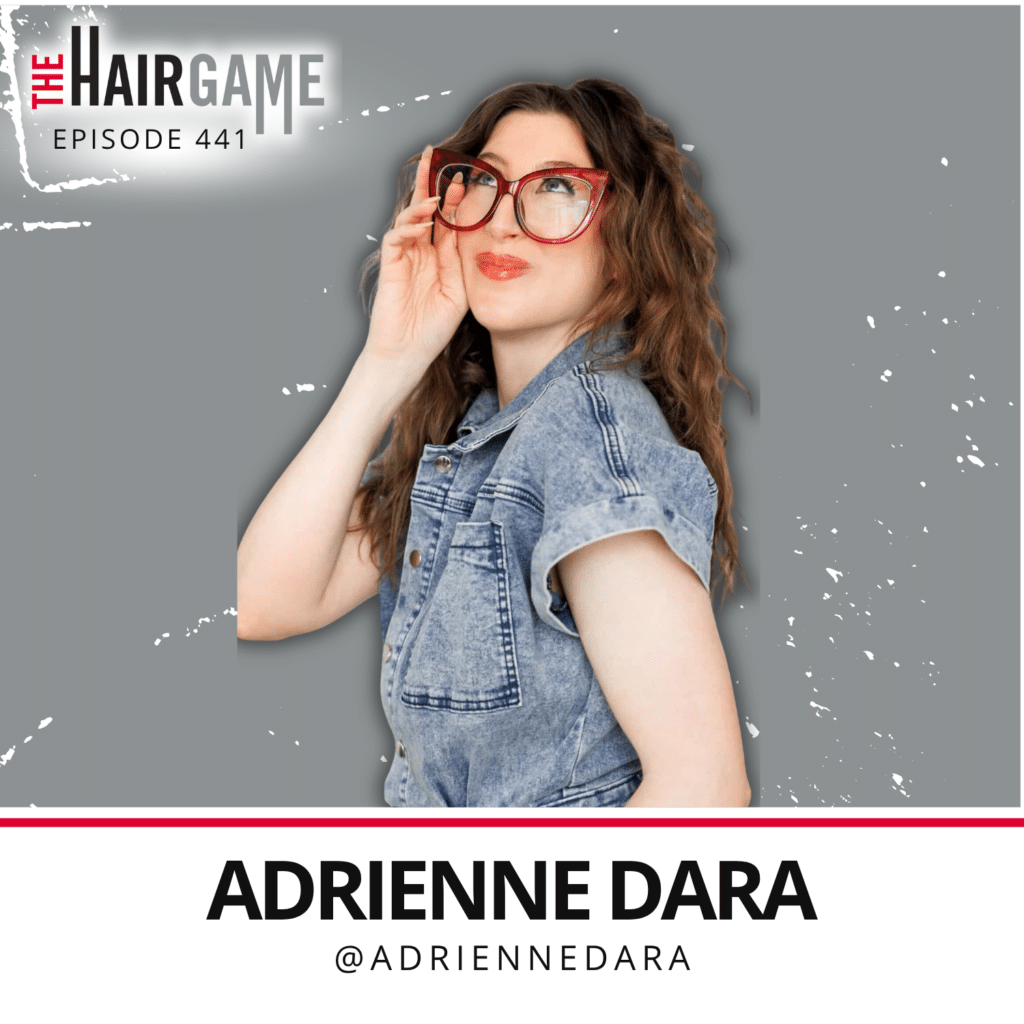
Global artistic ambassador and educator @adriennedara joined us on stage live at the Revindiecon convention to discuss her unconventional path from fashion to hair, her approach to education, formulation, confidence, and business strategies for hairstylists. Discover practical tips on social media, pricing, policies, and building authentic client relationships.
Eric (00: 00)
for those of you who know Adrienne, you probably love all the things that she does with education. And for those who don't, ⁓ you are a global ⁓ ambassador with Redken. Yes, yes. And you're part of SalonCentrics Pro Team. Correct. And you are the founder of the education platform ⁓ Lightning Library. so we're going to get into everything about Adrienne.
Adrienne (00: 21)
The Lightning Library.
Eric (00: 27)
And we're gonna kind of break up the conversation into chunks, into topics. We'll start with kind of like how she got in the industry and things like that, and then we'll talk about her education and what she focuses on there. And then after each kind of chunk of topics, ⁓ I'll throw it out for questions. So please think about questions as we're talking, and then I'll throw it out there and then raise your hands.
So, Adrian, thanks for coming. I came a little farther than you did. You're local. I'm not local, but I come to town more often now for the salons.
Adrienne (00: 56)
Thanks for having me.
Eric (01: 04)
but thanks for being here. And let's start with your unusual path to the salon industry. Sure. Yeah, you started in fashion. That was your original passion. So ⁓ you even got a bachelor degree in fashion. ⁓ And so why did you transition from fashion to hair?
Adrienne (01: 19)
Passion and fashion exactly
Well, I actually had an even more colored past than that. But I started off, so for those of you that don't know, ⁓ I'm based here in Philly.
So I'm a Philly girl. I've had my space in Center City, Philly for many, years. But I started off, like you said, going to school in the fashion industry. I applied to FIT. I thought I'm going to get into FIT. I'm going to go to New York. I'm going to live my dreams. I did not get into FIT. I will tell you that right now. And then I applied to another fashion school called the Laboratory Institute of Merchandising. And I went there.
for four years in New York. I, the entire time I was there, thought about not doing fashion and being a hairstylist. And so the moment that I left school and graduated, like you said, with a bachelor's degree, I moved back here to Philly and I got a job for a little bit working at the corporate offices of Urban Outfitters and pretended that I knew what I was doing.
And then eventually I thought, OK, I said, what am I doing? I need to follow my dream. And that's when I later in life at 25 went to Jean Madeline Institute and became a cosmetologist. So it was an interesting journey because I think really the big learning for me
was to kind of always follow what it is that you're thinking about. Because when I was in high school, it was something I was thinking about. But I don't know if you have all experienced this piece that sometimes comes with the end of high school. They had this giant board. And on the board, as you got into college, it would say your name and where you were going. And it was like so exciting. And people were putting up, I'm going to Yale. I'm going to Penn State. I'm going to all these places. And I thought, well, I can't say I'm going to
to cosmetology school. You have all these big names. So I thought, I'll go to college. But in the end, really, I would have saved a lot of time and money if I just kind of followed what I was dreaming about, right? Yeah.
Eric (03: 38)
Were you the oldest one in your class, in your causatology class?
Adrienne (03: 42)
Oh, far. I was like an elder, you know, for sure. At 25 to go to cosmetology school, it's a whole different ballgame. Plus, you know, I'm a full adult, so I was working full time. So I was also not fun. I was very tired, you know?
Eric (04: 00)
Love it. Talk about early mentors. Did you have any mentors in the industry?
Adrienne (04: 05)
Well, early mentors, yes, and then mentors later in my more professional life. But my very first mentor that I had was the salon owner who took me in after I graduated Cosmetology school, ⁓ Mary. the salon is no longer around, but it was in Philly for many decades. And I was a mom and pop shop, and she taught me everything I needed to know. She threw me to the wolves, but in a really nurturing way.
And I think that's the thing that I will say about having a great mentor at the early stages of your career is to know when you come out of cosmetology school, right, and you're so excited, but you're afraid because you really don't know what you're doing. And like, let's be honest, the scariest thing about doing hair is the people whose hair you're doing. It's, you know, you go to school with these dreams of being an artist, right? We're all artists. And you realize very quickly
You're so many other things as well. And there's this human piece to it that is really intimidating a lot of times. And to have someone who just kind of believes in you no matter what, I mean, this woman to this day, we still talk, believed in me from day one, from when I was giving terrible pixie cuts and possibly melting some hair off just a little bit at a time, slowly.
Eric (05: 21)
you
Adrienne (05: 27)
But yes, and then as my career progressed, now I have the honor of working with three of my mentors. ⁓ So that's amazing. At Redkin, we teach constantly. And something that's been interesting about that mentorship has been it's been less focused on how to do hair and how to effectively teach stylists so that
Stylists can do hair the right way and can have the education and learnings that they need so it's more of ⁓ That's a mentorship later in my career with learning how to to teach effectively and to be clear on stage and to be intentional and to not get up on stage and like teach for myself right like to get up on stage and know that I'm I'm on there only for who's in the audience not for my own needs and that's been a really incredible progression and thing
Eric (06: 23)
So you've transitioned mostly to education. You still see clients behind the chair, but primarily your focus on education. When did that happen and why?
Adrienne (06: 34)
Yeah, so, ⁓ you know, I had a salon in Philadelphia for 10 years. And in 2023, you know, I kind of started really realizing I wasn't present as much. was traveling so much for Redkin and then also I have my own education company for that as well. And I think that the natural progression of anyone's career.
is that you evolve and sort of rebirth yourself at different points throughout it. And that was a really big moment for me when I started realizing that my sort of passions had shifted. I had spent so many years building my dream and it was happening. And then I realized I kind of had this whole other set of goals. And so the shift to that was tough because when I made the decision that I wanted to
do education more full time, still take some of my clients, but really be focused on the stylist. had to shut down my salon, which was a really big thing. And that's really scary as it's scary as someone who owns a business and supports people and fosters a safe environment for people and fosters an environment where people make their income. And so that was a really interesting
you know, time because my number one priority obviously had to be making sure that that transition was comfortable for my team, but then also was making sure that am I making the right decision? I mean, I'm doing a whole career shift here. So I was really lucky because I had an incredible group of people that worked for me. Some of them actually still travel with me and teach with me in some of my classes. And when I decided to kind of go all in on education,
It was amazing because I realized that I all of sudden had the time and the mental clarity and space that I needed to create new content and ⁓ new ideas and be able to come up with other education, like other ways that I could communicate and teach stylists to be more successful. It just cleared a whole path for me, which was important because I was starting to get tired when I was on stage, you know?
What did I say earlier? That the intention is you're up there teaching for the stylist, not for you. And so I needed to kind of get back to that.
Eric (09: 03)
And so I assume that you tell me if I'm wrong, but you started educating maybe with some brands before you started Lightning Library.
Adrienne (09: 12)
Well, no actually. I started teaching in 2013 and I started Lightning Library in 2016. Oh wow, okay. And then I didn't start working with brands until like 2017, 2018. So it was kind of like a progression into the brands.
Eric (09: 28)
Alright, so you're still running Lightning Library. You've educated thousands of hairstylists. Tell us what that is. it subscription? What's the…
Adrienne (09: 34)
Yeah.
Yeah,
so lightning library, it's like I said, it's been around since you know 2016 and it's a virtual education platform. We have over 300 plus pieces of content and it's added monthly everything from tutorials to written blogs to you know video vlogs and it covers anything that you need to know when it comes to hair color. Now, you know one thing I will say is I am
know, Redken Global Artistic Ambassadors. So for me, my color line that I use is Redken. But it's everything from breaking down the science and the chemistry to how to use it, to even just understanding how would I approach doing a traditional full highlight all the way to a color correction service. There's also a whole business portion of it as well. The business portion is really close to my heart because it's everything from policy implementation to understanding pricing. But verbiage is the biggest piece.
I have over 100 scripts that I share on there of client conflict resolution scenarios. What do you do if someone says, hey girl, be there soon running late? I think something that can be really challenging sometimes in our industry is we spend a whole lot of time mulling on what to say. And so having sort of the coaching element of it, being able to sort of deliver that business piece.
is a big part of Lightning Library as well. So it's subscription-based, weekly, monthly, annual. But the thing I love about it is over these however many years I've had it, we've seen members come in, take what they need, go, and then come back when they need something else. I think sometimes it can feel like, especially when it comes to a subscription-based, should I join? Am I able to cancel? For me, it's just like, come and get what you need.
and take it and make it your own and you can come back if you need us again.
Eric (11: 39)
One of the things you focus on is formulation clarity.
Adrienne (11: 42)
Why is that?
Yeah, because formulation is so intimidating. mean, I know for myself, it was at five years into doing hair that I felt like, I think I know what I'm doing now. And then at seven years, I was like, I really know what I'm doing now. And it's continually been, you know, I've been doing hair now for almost 18 years, and it's continually been a learning process, especially if you're working with a new color line or just every canvas that sits in your chair is so different.
So understanding the core principles of formulating to me is like your tour guide that takes you down the road that leads to where you need to be. And so I just have such a strong emphasis on helping stylists to simplistically learn how to formulate because it is extremely complex. And I think with anything, like anything, I've always felt like this with any subject matter, there's always gotta be an easier way, right?
I mean, minus long division maybe, I don't know. But, well, calculator, you can just do that. So, yeah, for me it's just, let's make it easy and let's make it approachable and not so intimidating.
Eric (12: 51)
A lot of people love your education because you simplify it so much and I've heard this, it's not you telling me this, but I've heard this out there. ⁓ What specific things do you find ⁓ deliver that aha moment to the people in your classes and who watch your videos?
Adrienne (13: 10)
I'm
going to tell you right now it is like an analogy, like 1,000%. I like to use them in teaching aspects as much as possible to make things as relatable as possible. Like I'll give you one that I've been talking about lately that to me when I was thinking, how can I explain porosity and explain resistant areas of the hair because it can be so confusing?
And one of the things I've been doing lately is breaking it down to, well, think about how rain hits different surfaces, right? I mean, you have grass where you can see those little beads of water on the grass. It takes it in a little bit, but it's just sort of resting on it. And then you look at maybe the roots. And the roots, to me, are generally resistant.
So that's kind of like stone. If you've ever seen water hitting stone, it takes a lot for it to actually get into the core of the stone. And then what's our poorest ends? Well, sand. I mean, it goes so deep, right? If you ever walked on a wet beach, that's an intense moment. So it really, to me, it's stuff like that, just making it really visual and relatable and simple. ⁓
I think the main reason for that is just because there's always another way.
Eric (14: 40)
⁓ Any questions about formulation?
Adrienne (14: 44)
so the question was, is this really, and tell me if I'm wrong, is this just about gray coverage or blinding formulation or color as a whole? So for me, it's color as a whole. I have a wide palette of clients, everything from gray coverage to lived in services to color corrections. ⁓ And so it's really covering all aspects of it, but I should be clear, the biggest piece of it is actually understanding the hair color.
less about the specific canvas because I really feel like if you can understand the line that you're using and how to utilize that and understand how to read the chart and understand what all of these colors do and what makes up each of these colors, you have a clearer understanding of the individual canvas. So thank you for your question. Thank you.
Eric (15: 31)
Any other questions about formulation?
Adrienne (15: 33)
So the question was, do you have a more simple way of explaining the background colors for Redken shades? Do we have time if I do it real quick? Please. So OK. So what's interesting is there's two pieces, right? There's background and there's reflect. Raise your hand if you're a Redken Shades EQ user here. OK, cool. All right. So you've heard of Redken Shades EQ. I would hope so. So what can be intimidating is when you look at the chart as a whole,
I mean, I wonder if you've ever done this. You sort of open the chart and you freeze and you think, OK, cool, 130 shades. Love that for me. And so how can we simplify that? We can simplify it by understanding that when we have a brown to tan, a black to gray, and a no background, those are our three backgrounds. All of the shades that live within brown to tan are going to be more natural, more predictable.
What that means is that beneath the shade is a natural foundation. Now stay with me. I'm not done yet. Then you have black to gray, right? Metallic, ultra cool, ultra neutralizing. So all of those shades are going to be non-reflective because what creates reflection and color? Warmth, right? So you can think of them as a little bit, I hate to use the word muddy or dull, but flat. Hence why sometimes they look a little darker. And then you have your no background.
Eric (16: 53)
you
Adrienne (16: 58)
true to tone. What it says on the bottle is exactly how it's going to deposit. OK, but what does that exactly mean when we are talking about color? You can think of the 130 shades in Shades EQ kind of like rooms in a house. Like you won the lottery, or maybe you worked really hard, and you ended up buying a mansion with 130 rooms in it. And what is something that almost every single house has?
that is beneath the home, supports the home, stabilizes it, but you can't see. A foundation, exactly. Who said it? Raise your hand. Amazing. Snaps. Snaps. So the foundation is what stabilizes and supports. So the background, brown to tan, black to gray, no background, is the foundation of the shade in which you choose. But what about reflect? Reflect, just as an example, N, blue, violet.
Eric (17: 35)
Thank
Adrienne (17: 52)
You have like, and B, red, violet. Those are the colors within it. Those are the pink colors that you choose to paint your home because that's what you visibly see. Does that help?
Okay, so the question if, and I'm gonna repeat it for our, for our podcast and hopefully I'm getting this right, is, is it sort of the lighter the level, the lighter the pigment? Yes, so what you have to think about is this, with Shades EQ, there is an option to utilize clear. And clear in Shades EQ dilutes the intensity of the tone. And I do wanna just say this, and then we'll get back to our questions without going too far off.
I want you to kind of think about this. There was sort of this school of thought with clear for many years, and I promise I'll get to it, where if you added in clear, it would actually change the level. So like before there were the level 10s, oh, I'll put clear in with my nine and it will make a 10. But think about in Shades of Q, a 6AA, which looks like Bozo the Clown, compared to a 9AA, which is like blush, right? Or rose gold, whatever you want to.
describe it as. If I put clear in to dilute the intensity of your tone with the 9AA, of course it's going to emulate the deposit of a 10 because the reflex are diluted, hence being softer in their deposit. But the other thing to keep in mind with Shades EQ, and hopefully this will help you, is that all of the colors within Shades EQ are very different depending on the background.
Eric (19: 20)
you
Adrienne (19: 29)
Because if you notice, there are multiple shades in Shades EQ that have a blue violet reflect, but look completely different in their deposit, not because of the level, but because of the background that they live within. So for instance, N is blue violet. Well, so is P. And N is in brown to tan. Do brown and tan have warmth in them? So living beneath in the foundation,
of the end is elements of warmth, even though that's a cool deposit. But on the other side with P, it's metallic. It has a metallic foundation. So it's even deeper and darker. And that's why sometimes if you notice, there are some shades that, like a P and an N, that could be the same level, but look so much darker than the other because of the backgrounds that they're housed within. Hopefully that helps. Snaps for you. Cool.
Eric (20: 25)
Any other formulation questions?
Okay, so you've written books. Toning with intention, blonding with intention, and everything you need to know.
Adrienne (20: 28)
Yes.
and a fourth book. Formulating with intention.
Eric (20: 36)
and a fourth book named Formulating
With Intention, which makes a lot of sense. Okay, so tell us about the with intention philosophy. Why is that important?
Adrienne (20: 47)
Yeah, when we're making decisions, I think at the beginning of our careers and sometimes even in moments of panic, can feel like mixing hair color in the color room is like making spaghetti sauce, right? You're kind of just like, I'm just going to put some of this in and some of this in and hope it works out. But the with intention piece to me is that
I believe there shouldn't be any aspect or point when you are formulating that you're doing a little bit of this and a little bit of that. And it's not a moment where, ⁓ know, bad on you if that's how you formulate and it works. But having intention behind it, right, is going to help you to have more predictability in the outcome. So the books, there's, you know, there's three formulation books, which is Toning, Blonding, and Formulating. And then there's everything, which is the business book. And
The books all cover the entire Shades EQ line as a whole. They're all completely different in the sense that toning with intention starts off with the basics. Here's this shade. Here's what it does. Here's the background. Here's the reflect. Here's how to use it. Blonding with intention is here's some problem solution. Here's some real salon experiences and how you can start this, start to finish. And then you have formulating, which is the most up to date.
And that is more of the science behind the color. So having clarity is so important as a colorist. It helps your anxiety big time.
Eric (22: 16)
And this kind of has to do with confidence. You often talk about confidence. And I think we all lack confidence in certain contexts when something happens. We're not 100 % sure about ourselves. How do you teach confidence?
Adrienne (22: 31)
my gosh, I mean, I'm not fully confident, you know? I mean, I don't really know anyone who's 100 % confident all the time. I think to teach confidence, it's really about teaching clearly and teaching real things that people really need. Because the only thing that builds confidence, in my opinion, as a hairstylist behind the chair with your clients, is understanding what you're doing.
You know, ⁓ I think that's a big reason why when I teach, I really just try to teach things that I wish someone had taught me. Things that would have made my life a lot easier. Like I said, I had an incredible mentor, but one person can't teach you everything. It's impossible to say I could teach someone everything. It's insane to say. I think it really just comes down to
giving everything that you possibly have within you that could help that person and maybe they'll take 1 % of it and that 1 % will stick, you know.
Eric (23: 28)
Let's talk about the business stuff. So important, it's foundational to the business that we do behind the chair. It's not a lot of fun to talk about and deal with, but super important. ⁓ know, policies, pricing, things like that. Does anybody have any questions just off the top of your head? Things that you're thinking about these days behind the chair, things that you're struggling with, things that you're not confident about in terms of business?
Adrienne (23: 57)
That's a great question. So the question was, ⁓ how do I charge my worth? How do I do that? Well, I'm going to tell you something. Like I said earlier, I've been doing hair for 18 years. And the thing that is one of the hardest pieces for me is talking about pricing to my clients. And I think that if you're nervous this many years into doing hair talking about pricing, you're probably just going be like me and always will be.
It's that little feeling that you get in your chest, know, when you feel like a little vomiting almost. ⁓ I have a lot of friends that are super confident talking about pricing and charging their worth, and I admire that. what I will say is this to your question, raising your pricing and changing your pricing, that is hard, generally, because you're thinking about the one or two or three people who will react in a strong way.
that you're not comfortable having any type of interaction with, so you won't raise everyone's prices. Or you keep them at OG client pricing, you raise other people's pricing, but then by the time you're confident enough to raise the OG pricing, it's too late, because you've raised the pricing for everyone else over the years, and it would be too big of a price jump.
Right, but it's like, it's hard. So here's what I would say to you is for me, the way that I navigate pricing is I do do a price increase every single year. My client base ⁓ saves to come to their appointments. I don't have like a lavish wealthy customer base. So I know that it's my job and it's important and crucial for client retention that I speak openly about pricing.
So one of the things that I do, and I talk about this a lot in my book, Everything You Need to Know, is I have scripts in place. And the scripts are what I say, and it helps me to be able to guarantee that I'm going to communicate clearly. So I'll just give you an example. I mean, for many years for me, the way that I would talk about pricing is I would sit down and I would say to my client, OK, based off of everything we talked about today, you're looking at $500 for your service.
And then what would happen, it would just be quiet. And they're looking at me. And I'm looking at them. And then all of a sudden, because it's this awkward silence, I might say something like, you know, but if you're poor, I could do it for free, you know, because it's just, it's so uncomfortable. But then I realized if I had a script in place to talk about pricing,
Eric (26: 12)
you
you
Adrienne (26: 29)
it would force me to do it, but I would also only have positive experiences, not because my client would say, did you say $700? What a blessing. I was hoping I could pay that today, not because of that, but because I was facilitating a relationship built on trust. I was making it so we could have a conversation about it. So one of the scripts that I use that's been really great for me, and I hope this will help you, is I'll say, based off of everything we talked about today, you're looking at between,
five to, I'm just making a random number, five to $600 for your service. Should that not meet your budgetary needs, please let me know so I can help you to visualize a smaller service. So I'm not saying to them I could do it faster. I'm saying I can create a smaller service for you if that's not within your budget and I'm also being respectful in my words in the way that I'm positioning it. And that's been really great.
And most of the time, you're doing pre-consultations ahead of time. I also let them know the pricing prior to even coming in every single time. Even for some of my clients, I've been doing their hair for, I don't even know, 17 years, 18 years. They know it's the same price every time, but I still am like, just a reminder, here's what it's gonna be. So that would be my advice is having a script in place
Eric (27: 52)
Any other questions about pricing?
Adrienne (27: 53)
So the question, just to recap it to make sure I'm right, is do you think that it would be beneficial to if you have a client who pushes back on the pricing to say, know, inflation is happening all around, we're seeing it throughout our community, we're seeing it, you know, just it's happening. So the natural progression of my own business is that my pricing would go up. So here's what I'll say to that. I think that in the end,
it would be impossible for me and it wouldn't be right of me to say, the way that I'm gonna tell you to talk about pricing is exactly how you should do it and this is what works every single time. Because as we said earlier, we're in a customer facing industry and the way that people react is up to them, it's not up to us. And so the hardest part of our job is client conflict resolution sometimes. ⁓ So with that being said, I think whatever organically feels comfortable to you,
That is the way that you should communicate as long as it's on a professional level. For myself, on a personal level, I don't even bring that up because I kind of just feel like ⁓ it's one of those things where this is what the pricing is. If it's not within your budget, let me know so I can refer you to a stylist whom I know you'll be in entrusted hands with. It's always like leading with that sort of ⁓ less accuse, not to say you were saying to be accusatory to the client, I don't mean that.
But to me, rather than putting it on them, you never know what someone's needs are. And their frustrations probably come from a place that you make them feel beautiful. So I like to always lead with, if this doesn't work for your budget with me, I still want to make sure that you feel good. So I can find someone for you that's in your price range. But I love your perspective on it. And I thank you for sharing that. That's great. I love that. Snaps for you.
Eric (29: 42)
What about policies? So we're in a very interesting period now where we were in COVID and we all got pretty strong with the policies, deposits, prepayments, things like this. And now we're in a little bit of a different phase. I think we've been coming out of it now for 18 or so months.
Any questions about policies? Anybody unsure about policies that you've got in place or maybe you're thinking about implementing a policy? You know, maybe you had some clients kind of maybe walk out or something?
Adrienne (30: 17)
So the question is, I'm thinking about implementing a policy where a deposit is required to book an appointment with me. Do you have a perspective on what percentage is appropriate? Well, listen, I'll tell you what I always say to everyone, because I do get that question a lot, and I love that question, is that depends on what your comfort level is and your knowledge of your client base. So transparently, what I'll tell you is I actually don't
take a deposit. I don't think that it's right or wrong to take one or to not take one. But I don't just because in my history with clients, I haven't had any huge experiences where I needed to. I think that that really is going to come down to you having an understanding of is this a repeating thing that's happening? Does this make me feel safer to do this? But what I will just say is this.
deposit is gonna start to be taken. I think the most important part and job of the hairstylist is over communication of that. So with policies on the subject of it, I re-communicate even to my current clients, my salon policies three times throughout the booking process. So it's at the point of booking and then it's also.
publicly displayed on a website and then it's also in the confirmation reminder. So same with, you know, the idea of having taken a deposit just as a reminder, your deposit of this much was taken. Should you be unable to show up to your appointment, we need 24 to 48 hours notice. Your deposit will be held. The over communication is key. But yeah, I wish I could give you a number. But for me, it's really about you have to decide that for your comfort level. But I love that you do that.
Eric (32: 09)
I think it's also important to recognize the trade-off between having a deposit and getting new guests. Because the deposit is friction and so if you're trying to protect yourself, totally understand, but if you really want to have new guests coming in, then best to probably remove that friction and then you kind of gauge how it's going. If you're having a lot of problems with clients who are telling you they can't pay at the end,
then maybe it's something that you do want to implement even though it might cause you some fewer new guests. Any other policy questions?
Adrienne (32: 45)
just to recap kind of the great thing that you said is how younger stylists now are kind of coming in and and they're seeing all of this, you know social media influence of I'm seeing what other people are doing when it comes to deposits and to policy You know, there was a period of time on social media and like I want to say there's maybe the 2015 2015 where all of a sudden people started putting out what they were charging
First, there would be a picture, right? And it would say, is how much it costs. And while it was a really positive movement, because it empowered a lot of stylists, it also, there was this other piece of it where you kind of felt like you were running a marathon and you were in last place, right? And you're thinking, wow, people are charging all this money, and here I am charging not even a quarter of that. And so what I'll say to you is that in my experience, what I have found is that if you can
take away sort of the pressures of what you see other people are doing in the industry and try as hard as you can. It's so hard. It's so hard your whole life, right? And really just focus on what your comforts are for your personal anxiety. Like I'm a super high anxiety person. And as I got older and progressed in the industry, I realized I had to do things in place that were just on my time and made me feel good. So to speak to even just the idea of deposits,
What kind of what I was saying, if that makes you feel like safer, then do it. Just know what the sort of cause and effect may be. The trace. Exactly, that there might be friction. But I love that.
Eric (34: 24)
Any other policy questions? We kind of are tiptoeing towards marketing. You we're talking about filling our books and things like that. Any marketing questions? know, anything, does anybody, is any confidence, does anybody lack confidence in how to find new clients? Okay, we have hands raised. ⁓ Any questions related specifically to marketing?
Adrienne (34: 47)
I love this question. The question is should we give up on business cards? Are business cards dead? I'm going to tell you my opinion. I don't know if people are going to think of this, but so it's interesting because I do know some stylists now that instead of a business card, right, they have like a QR code and you can scan it and they'll take you to the website. But I think that the business card is never dead. And that's just my opinion because having a physical
thing that you can refer back to. A QR code is great, but it's kind of like if you go to a restaurant and you scan the QR code and then you leave the restaurant, you don't remember the name of the restaurant, but you want to look up what they had on the menu that you liked and you're like, I'm going to have to literally go find that restaurant and rescan the QR code. So for me, it's having the business card. You could put the QR code on the business card, but one of the things that…
that I like, and I just saw actually a stylist who had done this and I thought, this is great. Rather than having it all busy with, here's some photos of my work, it was just maybe like an index card size. ⁓ They had the important things, right? They had the Instagram, they had their TikTok, their name. But then what I really loved is they also had their email address. And the email address said, if you have any questions,
prior to booking, you can email me here. And it just felt really personal to me because at the end of the day, it's kind of what we were talking about earlier that, you know, during COVID, after COVID, policies got really strict and the relationships that stylists had with their client became more business and very, so there was sort of like a moat, like a little bit of a bridge built between the two. And it's nice to see us moving back in this nurturing sort of direction where we are facilitating long-term relationships with our clients.
So no, the business card is not never dead. Business card forever.
Eric (36: 42)
I'm gonna take it one step further than that. I think it's actually become more important because there's fewer of them
The phone is always in your hand when you have a piece of paper it's different. When you ⁓ bring up somebody's information on your phone it disappears into Safari or wherever it pops up, right?
and then we click everything away a couple days later. When you get a business card, I find myself as a consumer, my behavior is now, when I get a business card, I put it in my pocket. I don't throw it away for some reason. I keep it. And then when I get home at night, I take it out and I put it on my little shelf in my closet or something where it sits for like two weeks. And I look at it every time I go in there. I mean, that's like marketing magic.
There's fewer of them, so when you have one, I think it's more valuable because for some reason, people just don't throw them away. Especially if you have a nice one that's thick or whatever. Yeah, it's got some metallic or some cool brand on it.
Adrienne (37: 40)
You know what you should also always pair with a business card, and I'm not even trying to be funny, a firm handshake. And I am not even kidding. I will like hand someone that and then I will shake their hand. Like thank you so much, it so great to me. I can't wait to see you in my chair. You know?
Eric (37: 54)
I love it. Old school. Yeah. school doesn't go away.
Adrienne (37: 59)
their
other hand make it weird you
Eric (38: 01)
⁓
Other marketing questions?
Adrienne (38: 05)
So cool.
Eric (38: 06)
Their business cards look like tarot cards for the hairdresser
Adrienne (38: 10)
Amazing
okay, so this is wow this is so cool, so this is Colt studio Philly calm and The we're looking at the business card right now And it's a tarot card and it's so neat and it says the hairdresser you turn it over as the name and the contact info It has the Instagram. This is incredible
Eric (38: 27)
And
you can write it in, which is great because it's flexible.
so be creative. one of those things. you can be creative with and have fun with and they're not expensive.
Adrienne (38: 36)
no, and it makes the statement.
Eric (38: 38)
Canva or… Great.
Adrienne (38: 39)
I I will say something on the topic of business cards. This is sort of an old school thing that I'm noticing is coming back, is the photo. I I feel like there's been so, I mean, I make almost 100 % video content on my social media platforms, but I'm personally mainly targeting hairstylists. But for stylists who are targeting clients, I've been noticing a lot more of them actually doing full on photos.
Because the thing that's so important we have to remember at the end of the day is our clients aren't following us for any other reason than they want to be inspired and use our pages as a portfolio. So I feel like it's important to treat it like a portfolio in a lot of ways. So it's not new. It's just sort of, in my opinion, it's something that's making a comeback. I don't know if you want to add to that.
Eric (39: 31)
Well, I thought you might have been going in a different direction. I love the direction you went in. I think you're totally correct, but I think it's also important to put a photo of yourself.
Yes. On your Instagram or any of your social pages. I don't think nearly enough of us do that. I think new clients want to know what we look like. I think they want to know what they're going to experience. They want to see what the salon looks like. They want to know who they're going to spend two hours with. I think that's super important. A lot of people feel a little uncomfortable doing that. And I think it's important to get past that and to put that in there.
Adrienne (40: 08)
Yeah, that's great. I mean to build on to that and the wonderful comment was about how you know if you put yourself in social situations where maybe other people that will be attracted to you to eventually be your client are in those same social situations you have shared interests and it really speaks to the idea of how you can be a great hairstylist but maybe you and the client just don't have the same vibe.
I mean, all of us at some point, I believe, have experienced having someone sitting in your chair and you realize in the consultation that the two of you are just not gonna connect. And that's the reality, right? Again, customer facing. So I think I love that point about the idea of, know, listen, especially if you're gonna have a business card, give you a business cards out in a place where like-minded people are going to be.
because the chances that they'll be drawn to you and you'll be drawn to them are so high. I love that.
That was beautiful.
Eric (41: 09)
100 % you want to repeat what she said?
Adrienne (41: 12)
So Jules, who is at Innovate Salon Academy in New Jersey, had this incredible insight that you brought up to us and the idea of what your niche is and what someone else's is. That's what sets you apart. It's your personality. there could be, and I hope I'm getting it correct, but there could be a bunch of hairstylists in the salon. But your personality sometimes is the most standout part, maybe more so than the hair sometimes. Did I do a good job?
I hope so, but I love that message. That's great.
Eric (41: 43)
Yeah, so think about that when you're curating your social profiles. Does a new visitor come to your TikTok or your Instagram and does she see what you're into?
Adrienne (41: 55)
So to recap, you were saying, you put so much thought and so much time into the hair that you put up. But then if it's just something about your lifestyle or you being your authentic self, you'll just throw it up. And that feels almost more comfortable sometimes than posting your hair. And that will get more attention on social media sometimes than the art itself that you have done. I mean, that's just so accurate.
Eric (42: 20)
Human interaction, we all want it. Absolutely.
Adrienne (42: 23)
So Evelyn said that some of the cheapest marketing that you can do and the most effective marketing is just being yourself and putting yourself out there, especially on social media. I I will tell you this. have, between all of my social platforms, I have probably over 500,000 followers, which is a lot of people that have a lot of opinions.
will tell you I absolutely on a daily basis get torn apart. I mean, I have this one video that haunts me to this day where people still will just put like horrible, like every morning there's something new. like, that's from a long time ago. Like we're past that now. But I think what you just have to remember is at the end of the day, ⁓ your actual real life isn't on social media. That's just, that's just a thing that you're doing.
So you just have to kind of remove yourself if you can and say, well, I will just put myself out there. I will just be who I am. I know for myself, I can't be anything but who I am. I'm from Philadelphia, you know? But I think totally. And also, you can smell it if someone isn't their true self. And that's no fun to not be who you are. That's exhausting, right?
Eric (43: 39)
Yeah, I love that.
You know, I think with how much of our lives have gone digital, I think the in-person, whether it's the business card, and I'm so glad that was brought up, or it's approaching somebody in real life, maybe at an event that you're into, a concert that you're into, or a bar you like to go to, or whatever, in a store, I think that's kind of like a hat.
again because people don't do it as much anymore and it's more impactful if you can get up the know the courage to do it.
Any other questions about marketing?
At end of the day, we all want to be like a hero. You're a small person and you're going to beat yourself up over not being able to make this giant impact.
and you're ignoring it, just shutting yourself down and burning out because of that. One of the best ways to like protect that energy too is not burning yourself out, trying to make this big splash on social media and watching it fall flat because that's not where you're going to make the connections and if you want to focus on the community building…
Adrienne (44: 40)
one
Eric (44: 40)
right around
you. out to those social spaces, make those connections because it's at the coffee shop down the corner. It's at the concert, it's at the grocery store, it's wherever you want it to be and that's going to be your lasting impact.
that you had, sometimes it's not going to be that post that fell flat on the ground. Right. And it's almost become magic. There was actually an article in the newspaper this past week about how when you get older, you kind of discover, maybe rediscover the thrill of talking to strangers in public.
Adrienne (45: 12)
my God, I'm there. Okay, yeah. Well I'm saying hi. ⁓ I am, and I'm saying hi to everyone in a weird way. Yeah, totally. It's so true, but it is true and that's such a beautiful thing that you said to sort of recap it is, you know, like don't be so hung up on if you make a post and it falls flat, it's more so that you could say one thing to someone on the street and it just makes their day.
Eric (45: 16)
Do you feel that too? I bet you're older.
Yeah.
Adrienne (45: 40)
You don't have to always be this big fish. that's, know, totally what you, to speak to what you said that, you know, your one mentor said, everybody wants to be a hero. Of course, yeah, everyone wants to be sort of seen for the most part, but it is at the end of the day, it's about real human interaction. That's all that matters in the end. And if you, if you're too focused on that and not focused on the relationships you have with your clients, then you know, you're not really aligned on.
what you got into this industry for in the first place.
Eric (46: 14)
So you've described that one of the biggest challenges is navigating a constantly changing industry and we're in a constantly changing industry. So how do you see things changing now?
Adrienne (46: 24)
Well, I think that ⁓ it's interesting if we kind of bring it back to social media, there is a huge emphasis on high quality content, right? And so one of the things that I've really seen from the social media aspect, and then I'll get into the industry piece.
is it's a lot of responsibility and pressure for the stylist. Now you have to be doing great hair, you have to retain your clients, you have to run your business, and then you have to also be a movie producer. So it's really about understanding kind of what your, like max is, how much you can sort of take. And you don't have to be all of these things, remember. All of them are a choice. You could just focus on one piece if you wanted to.
But the other thing with the industry I think that's really changing is ⁓ I'm seeing stylists come out of cosmetology school now with moving into like specialization. Whereas when I went to cosmetology school in 1910 and I took a horse and buggy there, ⁓ you had to say yes to everything.
you know, yes, I can do an updo even though the bobby pins are gonna be showing. You know, yes, I can do barbering even though this is going to take you two years to grow out. You you had to say yes to everything. And so I really, as an elder stylist, I really love seeing that there's more of a choice now and there's more of this ability to come in and choose a vivid career or choose a lived in career and become an expert in that.
It can go either way, but for me, I love seeing that as an opportunity now for stylists. I think that's cool.
Eric (48: 08)
Awesome. Any other questions? Last chance before we let Adrian go. All right. Well, let's give a little round of applause, some snaps and claps for Adrian. Thank you so much for coming everybody and thanks for the great questions.
Adrienne (48: 21)
back to
Thank you so much. All right.
Eric (48: 26)
Yep, that's a wrap.
Thank you. Thanks everybody. Yeah, thank you. Thank you.
- Adrienne's path into the Hair Industry
- The Role of Mentorship in Career Development
- Transitioning to Education: A New Focus
- Understanding Formulation and Color Theory
- Building Confidence in Hairdressing
- Navigating Business Challenges in the Salon Industry
- Navigating Policies and Pricing in a Post-COVID World
- The Relevance of Business Cards in Modern Marketing
- Building Authentic Connections with Clients
- Adapting to Changes in the Hair Industry
This Week's Topics
- Adrienne's path into the Hair Industry
- The Role of Mentorship in Career Development
- Transitioning to Education: A New Focus
- Understanding Formulation and Color Theory
- Building Confidence in Hairdressing
- Navigating Business Challenges in the Salon Industry
- Navigating Policies and Pricing in a Post-COVID World
- The Relevance of Business Cards in Modern Marketing
- Building Authentic Connections with Clients
- Adapting to Changes in the Hair Industry


