How Taking Risks Creates Greater Opportunities w/ Danielle Nishiyama
Salon owner, founder of The Hair Symposium, hairstylist, and mentor @danielle.nishiyama shares her journey from a Spokane-based stylist to a leader creating change in the hair industry.
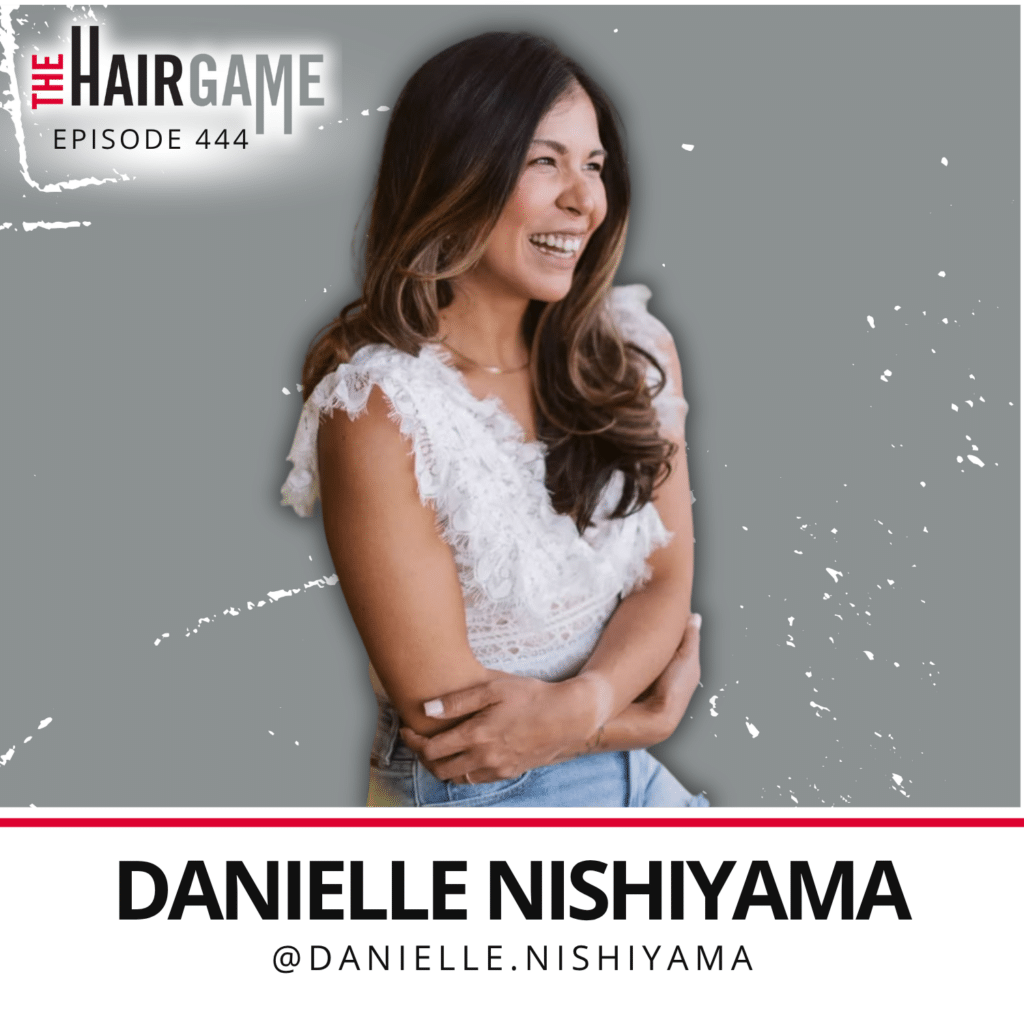
Salon owner, founder of The Hair Symposium, hairstylist, and mentor @danielle.nishiyama shares her journey from a Spokane-based stylist to a leader creating change in the hair industry. She discusses the power of education, community, and innovation while sharing valuable insights on business growth, industry evolution, and building meaningful experiences that bring hairstylists together.
Eric (00: 00)
Hi Danielle, how's it going?
Danielle Nishiyama (00: 02)
so good. How are you?
Eric (00: 04)
I'm great. So it's midweek. You are in Spokane, Washington, and I'm in LA. So tell us about Spokane.
Danielle Nishiyama (00: 14)
Well Spokane is in eastern Washington up in the Pacific Northwest. So we're just kicking off summer. I mean unfortunately it's like fire season for us, so we're kinda getting a a a little bit of that. Hopefully you guys don't have any of that in California this year. but we're just a lovely I call it a really big small town. Spokane has like a really great community and I feel like everybody knows everybody. but it's definitely growing by the minute and yeah.
Eric (00: 40)
Okay. Sounds like
a good place to have a hair salon, which you do.
You're a spoken hairdresser and salon owner and the founder of the Hair Symposium event, which is super cool. We're definitely gonna get into that. But why don't we just start with you? Where are you from originally and how did you get into hair?
Danielle Nishiyama (01: 00)
Okay, so I am from Spokane, Washington. I was raised here, and that's definitely where I started my career. I went to beauty school a couple years out of high school. I actually had my daughter before I went to beauty school. And so I was a young mom, you know, going going to school, wanting to provide something bigger for her and myself. And I fell into an industry that honestly has been one of the greatest gifts of my life. Like it has
Eric (01: 14)
Wow.
Danielle Nishiyama (01: 29)
allowed me so much opportunity, so much personal development and so much growth and a platform to, you know, do pretty hair, help other stylists learn, now connect people at a hair show. So it's definitely been a really fun journey for me and I've been in it for about 20 years now. And so I mean they say time flies when you're having fun, right?
Eric (01: 51)
Yeah,
no kidding. So this is kind of a default follow-up question to that, but I'm curious, so I'm gonna ask it anyway. If you didn't become a hairstylist, what would you be doing, do you think?
Danielle Nishiyama (02: 04)
I think about that sometimes and I feel like my skills now as a hairstylist like give me so much confidence. Like I'm like I could sell scrunchies online, I could, you know, I could do a lot of different things now that I have all of these skills. But where I was at and what I thought that like my future had for me, I don't really know what I would have done. Maybe something definitely with people and artistic, but I think it would have been in this in the same realm, like if I went into like into
interior design or
I don't know, like even if I did like social work or you know, working in counseling, like I feel like I would still be pulling a lot of the skills that I have learned as a stylist. And I think that those top skills are, being a people person, being compassionate, caring about the person that's next to you. And then also I've just really fallen in love with the education and the business side of things.
Eric (03: 00)
Interesting.
Falling in love with the business side of things. You don't hear that all the time. So one of the reasons that I wanted to talk to you on the pod is because you're starting this hair symposium show. tell us about that.
Danielle Nishiyama (03: 14)
So the Harris Symposium is a two day in person education event
Four hairstylists and salon owners, and it is the only thing of its kind in this area. I started it in my salon space, you know, four years ago. it was 2022, so it was like coming out of the trajectory or like whatever COVID put upon us. You know, 2020 was dark, and by the time we reopened, we were in such high demand, but a lot of things had shifted in our industry, and I found my salon.
business and my model really shifting in that time. so in 2021 I was kind of feeling lonely and burnt out as a salon owner. And so I wanted to create a hair show experience that we hadn't been able to go and do in a couple of years, which felt like an eternity at the time. and so I just kind of started pulling some of my resources to have educators.
And people that I knew were really inspiring and passionate about what they did. And I wanted to create that two-day experience for my salon team. So in the two days we had 10 speakers, they did color demos, extensions, I brought in business, you know, it was just fun. We did yoga together, we went out to meals together, and it was this really incredible immersive experience. And then being in the wonderful small community that Spokane has.
word traveled in social media, so the next year we ended up opening it up to other stylists, you know, selling tickets, and it got too big to host in my salon space, so we kind of bootstrapped it together and found an open space and did it. And since then, now this year is gonna be our fourth year. We have grown into partnering and like renting out you know local venues, and now we're able to host several hundred hairstyles.
So this year we're looking forward to welcoming 500 stylists and over 20 educators and speakers. Last year we had a ton of large brands join us. I think that the entire industry has really shifted since COVID, and now people are really craving human connection and being in that same room together, and for it to not feel overwhelming, but to still feel like you get all of that education, the networking.
And like I said, that that in-person community is really I think sought after right now.
Eric (05: 53)
Very, very
cool. Five hundred people. How many people are in Spokane? Do you know? What's the population of Spokane?
Danielle Nishiyama (06: 02)
I well it's growing. Like we've grown a lot in the last few years, but I don't know if we're quite at half a million, but I don't think so. I think we're probably in the two fifty or three hundred thousand range, but you know, we're in eastern Washington, so it's still a very like rural area and we just don't quite get like big education coming through. I think Seattle gets some of it and you know, I've traveled down to to California, LA, Las Vegas, that kind of stuff, but we definitely don't get
Eric (06: 10)
Okay.
Danielle Nishiyama (06: 31)
hair shows or anything of that magnitude in this area. So it's fun to be able to serve the Northwest in that way and and give people from Idaho and Montana and and other Washington, Oregon areas the chance to kind of drive in and and have that hair show experience.
Eric (06: 36)
Yeah.
Absolutely. So
this is one of those situations where I can see you thinking to yourself, Boy, it would be so cool to do the following thing. And then you probably thought to yourself, that's for somebody else to do. And then at a certain point you were like, Why not me? Right?
Danielle Nishiyama (07: 08)
Yeah.
Kind of and
I feel like it just had a natural momentum. Like I said, I created this as an experience of just being like a salon owner and an educator and like just a a fan of that type of inspiration and education. And then because we were kind of just like bummed out of as far as that, you know, in twenty twenty two, I did that and it just has caught on and I'm amazed because yeah, I didn't start that first show thinking I'm gonna start a hair show.
Eric (07: 13)
Mm-hmm. Yeah.
Danielle Nishiyama (07: 39)
It has really just been like the momentum of the community and the industry, both in like the Spokane area and just in our industry. Like we're now welcoming educators and brands from across the country and it's just it's humbling and it's such an honor to have people reach out to me and be like, Hey, I heard about your hair show. I would I want to be part of that.
Eric (07: 59)
Yeah. Yeah. So cool.
To go from in salon to outside of the salon and five hundred people, that's a big leap.
so I imagine the first couple that you had in your salon, obviously they take planning. It sounds like you you put it o you put a decent amount of planning into it, but nothing like what you're talking about now. So th like what are all the little components? Anything surprising as you started planning it? You're like, I didn't think about catering or what I don't know.
Danielle Nishiyama (08: 33)
Yeah, pretty much everything that you can imagine, it just kind of grows and it like is, you know, you're like, whoa, I'm doing something a little bit different. And I had that feeling at last year's symposium. Last year we had, you know, about 200 stylists in the room and over 20 speakers, and it just had gotten to a point where it was no longer just like, this little salon is doing this like cute thing for the community. It was actually like we're growing into a hair show. And that stage and that expectation
It applies pressure. I want every single attendee, speaker, sponsor, every single person that experiences the Harris Symposium to walk away and say that added a lot of value to to my life, to my career, that was a well-worth it experience. And so I am working, you know, endlessly on how to to continue to evolve that. but I would say that the hardest parts of it are the parts that you don't really expect, kind of similar to owning a salon.
Business, it's like you know it's gonna be hard, but you didn't realize it's like that. That's like, geez, I didn't even know that. so little examples of just like collecting data from like the first couple of years when it was just this little thing. So then as soon as brands kind of started to get involved, they kind of want to be able to track and present that to their you know corporate team and make sure that it is something that's worth their time and energy. And so we've just
Eric (09: 37)
Mm-hmm.
Danielle Nishiyama (10: 00)
had to learn all those little things.
Eric (10: 02)
Mm-hmm. And you need to
have people to help you with these things because it's it's more than just you can handle, right? So so who who's helping you?
Danielle Nishiyama (10: 09)
Yes, yes. So this year I have a team
of four. I've got a couple of different people that have been in the industry and have done a lot of different trainings on hosting events and education and what it's like to market that type of of a show and things like that. So it's now elevated this year to not just being a a one person, you know, team to actually having people fill in and be able to take this to the next level and to just see where it
can go which is exciting for me because I'm definitely the hairstylist, I'm the creative, I'm the visionary, I'm not necessarily, you know, the operator and the director of of every single hat that you have to wear.
Eric (10: 52)
Right. And
making sure the proverbial trains run on time, as they like to say. You gotta have somebody to make sure the trains are running on time with something like this. Because I imagine you're charging money, right? so what are you what are charging?
Danielle Nishiyama (10: 57)
Exactly, exactly.
Yep, yeah.
So for the two-day, just like a general admission ticket, it's $199. You can buy a one-day for $150. So we definitely want people to come for both days. And then if you're a VIP, that ticket is $650. It's $6.49. but that one comes with a lot of different perks. You get an amazing swag bag, you get two hands-on classes. So a hands-on education class each day of the show is gonna be
you know, the big value bringer for them and I can't say what exactly those classes are going to be but we have been survey our last several our last couple of years and we've taken all of that information and we are beyond excited to announce what those hands-on workshops will be because we know it is exactly what the stylists are hoping to put in their tool belt today.
Eric (12: 05)
Mm, mm-hmm. Very
good. And sometimes with the VIP there's like a party, like a meet and greet with the educators?
Danielle Nishiyama (12: 10)
Yes, they definitely get
different social networking. They have a VIP lounge. They get to do all of that with the educators. And that's the best part about having this still a show of five hundred people. That's still small enough that we get to treat our VIP to a really fun, intimate experience, and I think that that's the biggest takeaway for me is like being able to have a conversation and meet the people that you admire online or that you know.
or doing things that you want to do, that's gonna be the biggest takeaway.
Eric (12: 42)
Yeah, absolutely.
So are you worried about making the economics work and avoiding losing money? because that's a concern, right? Because I know some people who have done this and they see they did it differently than you. Like I love what how you're describing it where you started small in your salon and y slowly but surely, you you kind of
earn the trust of your teammates in the salon, so they show up. And then slow slowly but surely, probably the community there in Spokane, to the extent that more people want to be involved. But I've seen it happen where people just try to go big right out of the gate. And it's like, shit, we didn't sell enough tickets. But I've got
you know, I gotta pay the venue, I gotta pay the people showing up, I gotta pay the drink guy, you know, whatever, the food person, right? And then they lose their ass.
Danielle Nishiyama (13: 37)
Yeah, I feel like that has been a stress point for me every single event because you wanna add a ton of value and you wanna make sure that they get it. And then being right now and where this the state of the world is in, like selling tickets, it's a vulnerable experience to put an event out there because you have to put in a lot of money to do that. I will say that if I had totally eaten it, then I probably wouldn't have continued at this level. I would have brought it back down to control. So I feel like at this point I
Eric (13: 55)
Absolutely.
Sure.
Danielle Nishiyama (14: 07)
Being a business owner, I know how to take calculated risks, and I can see the potential for what this is growing into. And our sponsors and educators and our attendees, I do truly feel lucky. Like we had pre-sale tickets, you know, going on a few weeks ago, and we sold so many, and we haven't even announced like one speaker yet. So the fact that people do trust me that I'm gonna deliver it, like I said, there is pressure.
That gets added on every single year, but I I like it, like I tend to work well under pressure, and I think that that's also what's creating the momentum to make people want to to buy in and to join this, whether they're speaking or attending or however.
Eric (14: 45)
Great.
Good for you.
I mean it's vulnerability was the perfect word to use because that's what happens when, you throw a house party, you know, that's what happens when, you know, you you invite your friends over. they may not show up, right? All the way to something big and commercial like what you're doing, where you've you've got yourself on the line.
And you absolutely have built up the trust of the people there in Spokane. And so just for listeners' sake, Spokane's got a population of 230,000 and greater Spokane, which I'm sure there's lots of amazing areas around Spokane, right? 600,000. So that's about how big it is. And so some of the listeners, you know, I hope they're thinking, my, I live in a town, you know, that's bigger than that. I could do something like this, or I live in a town that's
about the same size and I know a lot of people maybe that's something I should do. So
Danielle Nishiyama (15: 48)
Yeah, and I definitely
feel like the momentum has grown. Like it's not just that it was this is my fourth year doing it. This is my twentieth year in the industry. And your reputation is your number one asset in what is gonna leverage this this long-term career path, I believe. And I think that I have earned a reputation for caring about education, caring about community. Before I hosted hair shows, I definitely have always hosted
amazing education and and built relationships with educators throughout my entire career and so it feels very rewarding to get to a place to where you get to grow and dream bigger than you ever even like entered in with the the arena with the idea, you know. Yeah.
Eric (16: 31)
yeah. That's what life is all about, isn't it? It's about
being a g I'll use your word again, vulnerable enough to keep putting yourself out there and doing stuff that maybe you wouldn't have th thought you could do two years ago, but now here you are doing it. That's where that's where our satisfaction comes from, I believe. That's amazing. Good for you.
so tell us about salon life these days. Are you seeing anything new behind the chair? Any any new trends? Now of course we're talking about Spokane, you know, each market is a little different, but we all live online these days, so I'm not really sure how different it is. What what are people asking for these days?
Danielle Nishiyama (17: 10)
As far as services, my salon does a ton of extensions and a ton of lived in color. I think that our industry is experiencing the consumer has changed their behavior a lot in the last few years, and they're wanting services that add a ton of value and longevity, and they want to make sure that they're spending their time and their money with stylists and salons that really mirror their values right now, too. So I know
I noticed that our consumers care a lot about the guest experience and they almost
really want to understand how that entire process is going to work with a lot of transparency and they they kind of want to feel very confident in their investment in their hair. But I also find that when you have that trust built with them, that there is still just so much
That they are willing to spend inside of the salon. You know, I started my career in I graduated beauty school in 2009. So when I got into the salon, it was similar climate in the in the economy as far as like back in 2008 and 2009, that was like the Great Recession. And I would hear stylists and salon owners talk about how the salon wasn't as busy as it used to be, and you know, that they were losing money every single day.
And as a young stylist, I remember thinking, Well, I just got out of beauty school, so I'm the poorest I literally could ever be, so it can only go up for here for me. And I just found ways to serve guests and meet them where they were at, and that's kind of like when ombre and lived in color started to poke its head through. Well, now I feel like people, some people are saying, like, we're not getting as much bookings, people aren't spending money on their hair, they're not doing that. And I don't find that to be true inside of the wall.
Of my salon space and my team, we're booked in busy, but I definitely feel like we put in a lot more effort of explaining and showing our clients before they're in our chair of what that guest experience and what value we bring to their life is going to be. So I think connecting with our consumer is different.
Eric (19: 22)
Yeah,
absolutely. Some people call it the K-shaped economy, meaning that you have one line going up and one line going down. some people are, you know, struggling more than they used to be, and some people are doing better than they used to be. So there's I think this is why you hear people on both sides
of the current s situation. You hear people say, it's horrible, you know, my clients are spreading out their appointments really far. And then you hear some people say probably fewer because it's sometimes doesn't feel very good to come right on top of that and say, I'm doing great. I'm
you know, booked and busy. So by saying so, you almost feel like you're calling the other person a liar or making them feel like they're doing something wrong. But I think that is the reality of a lot of businesses, not just ours. a lot of businesses are doing great. And at the same time, a lot of businesses are not doing as well as they were, you know, three, four years ago.
Danielle Nishiyama (20: 24)
Well,
What happens when we have big shifts in the economy like this is it's like it cuts out that middleman. So it's either the the top dogs and the people that can that can pay to stay and stay in the game, or the ones that are really evolving their systems and the way that they're connecting with their target market and they're they're finding how to serve the new consumer. And you know, I don't know, it is still limitless. I just think that we're in a time where business and especially in our industry.
People are being blockbustered out. Like you have to kind of get on that new train.
Eric (20: 59)
So let's talk
about that new train. So Blockbustered Out, that was a reference to Blockbuster, the VHS video recording company that got taken out by who? Netflix. So Netflix came along and encrushed Blockbuster, who was the 800-pound gorilla of what pretty much everybody used to do on a Friday and Saturday night.
Danielle Nishiyama (21: 11)
Netflix.
Eric (21: 25)
I'm old enough to remember that. My now wife and I used to go out and rent a video and then bring it home, stick it in the machine. Yeah.
Danielle Nishiyama (21: 32)
Yes.
Yes. Yeah, I loved doing
that. It was an entire experience and it wasn't just about the video, if you remember. You would go in for the video, but you would also, if your parents were in a good enough mood or you had saved up enough, you could buy a some candy, popcorn, you could even purchase an old DVD that they decided, you know, there was a lot of different ways to like serve that experience and it was so much fun. And now when I talk to my stylist, my team, if I bring up Blockbuster, they don't even know what I'm talking about.
Eric (21: 49)
yeah.
Yeah.
Mm-hmm. Yeah.
Danielle Nishiyama (22: 04)
never even heard of it so they don't they don't care and I remember that shift kind of happening when I was first getting in the in the game of hair and I think that it's just taken some the roller coaster ride of of life and the way things have evolved and I I just I think that we are gonna be seeing some brands and businesses not make this next cut.
Eric (22: 06)
Yeah.
Yeah.
Mm-hmm. Okay,
so let's talk about the kind of evolution in our industry from blockbuster DVDs to Netflix DVDs to Netflix streaming. What is our version of that? Is it like how how do you see things having evolved? And you know, I want you to talk to maybe some of the salons who are fighting the evolution and what they need to do.
Danielle Nishiyama (22: 51)
I think it definitely has to do with our pace as the leaders, salon leaders, and leaning in and utilizing AI and some of this technology to make systems and experiences simplified and more streamlined for us in the business. So I am a huge fan of I use Forest Salon software, they're phenomenal, Vish, you know, having the salon scales and tracking things and not just being able to see what everything costs you, but to be able to control.
your budget and project what's gonna be going on in the future. I think that that's gonna be, you know, huge for salon owners and I think that a lot of people, they drug their feet even with online booking, or schedule, and stuff like that. So I just I think that those things for business owners are huge. And then as far as like service wise, I think that extensions are
the new wave of how color was introduced into our industry, and I think that they're here to stay and the and on all of the different extension types. again being a 20 year veteran, I remember when tapes and K-tips and all of those things came and went and now they're they're resurfacing and there's a lot of different technology that has been, you know, redesigning how we can make
hair lighter and more natural and give our clients their actual dream hair. so I think that finding you know niche services is gonna be huge.
Eric (24: 20)
Yeah, I love that. So I want to speak primarily to what you first mentioned, which is that you use forest and you use Vish to manage your color. what about marketing? Do you market differently?
Danielle Nishiyama (24: 31)
do so I still I mean we come from a a smaller community here so Google and Yelp are actually like two of our bigger marketing pockets that we prioritize at my salon and we get a ton of traffic from both of those and then I also partnered with Glamatic which is a beauty like a salon website builder and they have incredible
Services and AI streams to help support your website and get a lot of traffic driven there. And they do a ton of different types of campaigns. But Forrest has incredible marketing campaigns, and I'm able to track where every dollar goes from that. Like the services that are inside of like our booking systems and our scales are abs I mean they're absolutely incredible.
And they really have helped make marketing and taking that kind of stuff off of my plate. I mean, we see on average 150 new client requests a month at my salon, and I just could not keep up with doing all of that on my own.
Eric (25: 43)
Mm-hmm. Yeah, for sure.
For sure. that's amazing. So, Forrest is P H O R E S T. but there's there's multiple platforms out there, whether you're a salon or whether you're an individual, that are just tremendous. And there's been an arms race with these guys to try to offer better and better functionality day after day. And it seems like the top
platforms have have all done a really, really good job offering things that are valuable for individuals all the way up to big salons. And it it's really great for our industry to see this because I'm in my twenty-sixth year, maybe twenty-seventh year, and I think back and there was nothing like this. You know, people working out of books, scribbling things in,
and now you've got complete CRMs where you you can track everything about a customer, everything about a client, even if you only see once every eighteen months. Yeah.
Danielle Nishiyama (26: 38)
Yes. It's incredible
to be able to have things completely automated and you don't even have to think about. If you don't come into my salon for nine months, you're gonna get a we miss you email. You're gonna get an email on your birthday. You're gonna get you know, there's just so many things that you can set and forget that it just it helps and it compounds. yeah. I just think it's incredible because I same as you grew up having to think about and o and do everything myself.
Eric (26: 58)
Fantastic.
Mm-hmm. Mm-hmm.
Well, what keeps you up at night?
Danielle Nishiyama (27: 07)
keeps me up at night. selling tickets to the Harris Symposium, making sure that we're getting in front of as many people as we can and really feeling like I'm gonna just bring it and make everybody feel like that was this is the weekend that changes your career. that's what I want people to walk away saying and like I said it I put an extreme amount of pressure on myself to do well at anything I at anything I sign
Eric (27: 10)
Ha ha ha.
Hmm, that's fantastic. I detect a little bit of how I feel when we plan our Salon Republic Christmas party, holiday party, at the beginning of December.
And I get my personality is such that I get pretty nervous about these things. I mean, we've done it for, twenty five years, but it's gotten so big we've got a couple thousand people who show up and I don't need to sell tickets. We you know, we do it and and our Solana Republic beauty professionals show up, but they don't have to, right? And that's okay, but we do it for those who want to come and a couple thousand people come every year. And I get I have a lot of anxiety leave.
Leading up to it, you know? and I don't even have to sell tickets. so I I totally get it. And then there's a great deal of satisfying relief afterwards, when it was successful and everybody had fun. And hopefully you get that same kind of satisfaction afterwards.
Danielle Nishiyama (28: 28)
Me tell you, there is
there is a high that I ride for quite a while, and honestly, it's turning into a year-round planning and you know execution process. So I'm getting to, like I said, I'm getting to really learn so much, and it has pushed me so far out of my comfort zone. have you ever read the book Ten Times Is Better Than Two Times? Or 10X is better than 2X? I now I can't think of who wrote it, but that is I read that book a couple years ago.
Eric (28: 32)
Yeah.
No, never heard of that.
tell me the name of that one again.
Danielle Nishiyama (29: 08)
ten X is better than two X.
Eric (29: 11)
Okay, hold on a second. Where I have a list of books that I try to get to. Ten X is better than two X.
Well of course ten X is better than two X. What is it what does that tell me?
Danielle Nishiyama (29: 22)
Right, but it doesn't seem
It doesn't seem that simple, but it basically is a mindset that you commit to of ten timesing whatever that goal is. Because if you're just trying to double it, like double ticket sales from last year, double this, double that, you get to those ceiling points and those breakpoints where you're like, it's just not possible. But when you're going for something, if I'm 10 times in that number, I don't know what's you know, 10 times 100, if I want to get a thousand people here this year, I am literally
Eric (29: 26)
I know.
Danielle Nishiyama (29: 53)
gonna have to push so much other stuff aside to make that happen that you end up doing things that you would assume would take you years and a much shorter amount of time. So
Eric (30: 04)
Interesting.
I'm gonna check that out for sure. if you could wave a wand and change anything about the industry at all, what would it be?
Danielle Nishiyama (30: 13)
I would wave a wand and
Eric (30: 20)
Tell me. No, you can't laugh and not say it.
Danielle Nishiyama (30: 18)
feel bad saying
I
Would strongly push apprenticeship for our industry and and get rid of people going into massive debt of school and then having to learn that craft. I think that our industry is treated so differently when it comes to our hours and being qualified. And not that I don't think that what we do is important and delicate, but we are just doing hair. So I definitely feel like apprenticeships should be the way
of how our future professionals learn and grow.
Eric (30: 57)
And why don't
you think that is? Now, this is a very common refrain that I've been hearing pretty much my whole career that beauty schools take too long, they don't teach you enough, students graduate, they pass their tests, they get their license, then they go to a commissioned salon and they don't know shit. And then the commissioned salon owner has to put all this effort.
into not only teaching them the services that are actually in demand by the public, not the roller set stuff that they learned in school, but everything else, all the soft skills, showing up on time, how to talk to a client.
Doing a consultation. Yeah. Why is it that and then of course you mentioned apprenticeships where somebody might learn such a thing instead of going to beauty school. And why has it been difficult to get apprenticeships to be more popular than beauty school?
Danielle Nishiyama (31: 56)
I don't I honestly I don't know. I think for me introducing apprenticeships inside of my salon space, it was really that I almost felt like I had so much on my plate, I don't know how to take the time to learn one more thing. and now that I have apprentices in my salon space, I'm like, holy cow, I should have done this rather than taking on new grads, you know, a long time ago. but I also feel like my salon model and my you know heart as a mentor really has been.
Eric (32: 20)
Okay.
Danielle Nishiyama (32: 26)
I'm kind of known as for my associates program and like grooming and mentoring students right out of school. There's not a lot of salons or commission salons that are, you know, in in Spokane at least we're a lot heavier populated of rental and like independence rather than commission style salons. So there's not a lot for them to choose from to even get mentorship. It kind of feels like they have to go to school and then they're just kind of on their own. A lot of people just will start renting right out of school.
Eric (32: 54)
Mm-hmm.
Danielle Nishiyama (32: 56)
So yeah I don't I don't know why it it isn't more popular but
Eric (32: 56)
Mm-hmm.
know, so I I so I asked the question because I wanted to get your perspective. ~ in a lot of the conversations I've had over the years where apprenticeships have fallen fallen away, fallen behind, or not delivered, is due to the the mentor, let's call it, or the teacher, or I don't know, it could be a salon owner, it could be somebody on the staff or whatever. they
Essentially didn't teach the people anything. They just used them as an assistant, as an inexpensive assistant. And I I I've heard even on this podcast, you know, when I asked the question, how'd you get into the industry? you know, there are some themes, but a lot of people have unique experiences. There have been some people, a number of people who went through apprenticeships that didn't work out because their mentor was bad.
you know, just didn't put the effort in, right? I mean, i in order to be a good mentor to an apprentice, it's like it's an additional job, right? Like you're really training somebody or teaching somebody as a as an alternative to beauty school, and that's gonna take a lot of time. And I found that very often the case the the mentor is more more interested in the service on the client than actually teaching something.
Danielle Nishiyama (33: 54)
Yeah.
Yes, so I definitely treat it as a completely different hat that I have to put on a couple of days a week and teach classes and you know take it from step one. but like I said, my experience with new grads is that I as a salon owner I was really doing that. I really care about I have a large salon team and I also have a hybrid salon. So there's people that have been doing hair for five minutes and 25 years all under one roof. And so in order for the
Eric (34: 23)
Yeah.
Danielle Nishiyama (34: 48)
Guests to have confidence in their bookings. I had to set a standard for new stylists to get to before they got to serve our guests. And so for me, I felt like I was already doing that training and taking the time to do that to my standard. So it makes a lot of sense for my salon business to have the apprenticeship program. I would 100% agree with you. I'm sure there's plenty of people out there that look at it as a cheaper way.
Eric (35: 11)
Yep.
Danielle Nishiyama (35: 17)
Of getting an assistant, and I mean apprentices if you're thinking about doing that you need to go into salons and you need to interview the mentor and the salon owner and make sure that they have something to really show you your career path rather than just I'll do this.
Eric (35: 33)
Yeah. That's right. That's right. Do
you have any hair horror stories?
Danielle Nishiyama (35: 39)
I have so many hair horror stories. Do you wanna hear like clients? Which ones? I mean
Eric (35: 42)
Give us your favorites. Give us one
service horror story and one client horror story.
Danielle Nishiyama (35: 51)
Okay, a service horror story that I was the stylist in would be
it was one of my longtime clients and I did the thing that stylists tend to do and when you've been doing someone's hair for a long time, you think you know them and you know everything. So I didn't do a very good job at my thorough consultation. So my client came in and said, I I want I think I want to do a bob today, and I was like, Yes, girl, so cute, let's do it. So I cut the bob and it was adorable, and as I'm blow-drying it, she gives the like the side eye in the mirror where you know something's wrong, but you try to
Eric (36: 16)
Mm-hmm.
Danielle Nishiyama (36: 25)
Ignore it. that's not really my style, so I stopped the blow dryer and I was like, Tara, what's wrong? I saw your look, and she was like, I just I thought that we talked about a bob and I wanted it to sit like right under my collarbone, and her bob was like above her shoulders, so one and a half inches on a bob's exactly is a really big deal. So that was awful, and as a a stylist who really
Eric (36: 43)
Yeah. Two different definitions, understanding of Bob. Yeah.
Danielle Nishiyama (36: 55)
Valued her and wanted that to I didn't want her to go home that weekend and all of her girlfriends see her and be like, my gosh, I love your new Bob, and then her story be Yeah, she went a little too short. So, anyways, I took my cute little extensions, gave her a couple of tapes and and kind of angled her bob so that when she saw it it would be a visually closer to where she wanted it. It still might be a little bit of a story at Girls Night Out, but at
Eric (37: 24)
Yeah.
Danielle Nishiyama (37: 24)
At least
they wouldn't be afraid to come and see me. They would think, well, at least she'll take care of me if she fucks up. So that was not good.
Eric (37: 31)
That's so funny. Yeah.
That's a good one. Okay, give it give me a good client one.
Danielle Nishiyama (37: 36)
A good client one. Well, like I said, I'm a salon team leader and I also work behind the chair two days a week. So I am booked those two days a week and my team is also taking clients and this was just a couple of months ago. I had a woman get up in the middle of her service with her stylist and tell that stylist that she was no longer going to be cutting her hair and that the owner was gonna come over and cut finish cutting her hair. Mind you, the owner was doing her own client's hair.
Eric (38: 06)
Right.
Danielle Nishiyama (38: 06)
So it was one
of those moments where all eyes were on me, my team, the clients, my client, and I was like sweating bullets of like what do you do in this situation and how do you take authority and think about the big picture and you know protect everybody? Because I get to be a little bit of a mama bear to where I'm like, you are not gonna make my stylist cry on Wednesday at 2 30 when we have 25 people in here. but then also knowing that like resolving things and
Eric (38: 32)
Mm-hmm.
Danielle Nishiyama (38: 36)
and being the calmest one in the room and making sure that everybody's taken care of to the fullest extent today and long term is my is my number one job and it's only it's my only job. So I think that that just is one of those very rare but hard spots to be in as a salon owner.
Eric (38: 58)
So what'd you do?
Danielle Nishiyama (39: 00)
I put my client on hold and I walked over and I finished the haircut and I helped her exit as quickly as I could and then and I did have a very, you know, transparent, like gentle conversation of that the styles that she was seeing
was qualified and exactly where she needed to be at, for her career and
So we ended up having a little bit more of an in-depth conversation because I was actually the person who had booked this woman, you know, a few days before. And we talked to our new clients a lot on the phone. We really try to do like a mini consultation on the phone so that we can pair them up with the right stylist. And so yeah, I just I feel like sometimes clients that you know have the writing on the wall, this is somebody who wants in in less than 48 hours.
and has you know a budget where our stylists start at so you know I feel like it's just one of those those hard conversations that you have to have with the consumer to protect your business and protect your stylist
Eric (40: 07)
Mm-hmm. Yeah.
So is this a situation where somebody wants to pay less, but then they expect a result that you can only expect from some of the top people in the salon? Yeah.
Danielle Nishiyama (40: 21)
Absolutely.
Absolutely. She was still you know, she was doing a beautiful job, but the the haircut, the density, the texture, like all of the things, and I told her that on the phone. I said from the sounds of your hair and what you're looking for, I think that you would be best suited with one of our senior stylists and and that's what this is. and and she didn't want to pay that much and she also didn't want to wait to get into the senior stylist books. So when you're seeking a price point and convenience
that does shift it shifts things for everybody in any industry.
Eric (40: 56)
Yeah. Yeah. Well,
this is the proverbial you can have value pricing, you can have what you want quickly, and you can have what you want from a quality perspective. You can have two of the three, but not all three, right? And it it's so funny how that applies to just about everything. Yeah.
Danielle Nishiyama (41: 12)
Mm-hmm. Yeah.
Everything. Yeah, and you know,
i it's great because it's I don't know about you, but being a business owner and being a salon owner, it's made me a way better consumer as well. And I I think about how that might translate in in what they're doing and yeah, I just I and and she understood once we had that conversation and she had that real life experience, but I d I just think that sometimes our clients don't understand our business to the depths that we do and we're working rapidly at every moment to make sure that
Eric (41: 29)
Yeah.
Course.
Danielle Nishiyama (41: 49)
That we're filling in those gaps. So that story just reminded me that since that experience, we have partnered and brought on Maya. And I don't know if you've heard of Maya, but it's a quiz system on our website that our clients can take this two minute quiz based on their hair, their goals, their schedule, their budget, and then it gives them three different options inside of my salon, and then it
connects them to their Instagram and their schedule and their pricing so then clients can really feel like they're connecting with the right stylist on all the different levels and that since we've brought that on that has been a wonderful thing but like thank goodness that we live in in a world with technology and with people with bright minds Katie Whitledge is the one that designed Maya and it's like they're filling in the gaps for us.
They're making these things that we know happen in the salon experience every single day, they're helping us bridge those gaps.
Eric (42: 54)
Mm-hmm. Mm-hmm.
Super cool. Well, any last words for the community?
Danielle Nishiyama (43: 00)
Passwords for the community is that this has been the absolute best industry that I could ever imagine working in. I absolutely love it, and I hope to see you all and get to meet you at the Hair Symposium. If you are in the area October 25th and 26th, tickets are live, but please give us a follow on Instagram. I would love to connect.
Eric (43: 20)
I love it.
we'll put the links in the show notes and check it out, listeners. Thank you so much, Danielle. It's been awesome.
Danielle Nishiyama (43: 27)
Thank
you, thank you.
- Journey From Behind the Chair to Industry Leader
- The start of the Hair Symposium
- Planning and Challenges of the Symposium
- The Growth of The Hair Symposium
- Building Community Through Education and Connection
- Taking Risks and Creating Bigger Opportunities
- The Evolution of Hair Trends, Services, and Client Expectations
- Using Technology and Marketing to Grow a Modern Salon Business
- The Future of Apprenticeships, Mentorship, and Industry Growth
- The Challenges Behind Creating a Large-Scale Industry Event
- Innovating the Future of the Hair Industry
This Week's Topics
- Journey From Behind the Chair to Industry Leader
- The start of the Hair Symposium
- Planning and Challenges of the Symposium
- The Growth of The Hair Symposium
- Building Community Through Education and Connection
- Taking Risks and Creating Bigger Opportunities
- The Evolution of Hair Trends, Services, and Client Expectations
- Using Technology and Marketing to Grow a Modern Salon Business
- The Future of Apprenticeships, Mentorship, and Industry Growth
- The Challenges Behind Creating a Large-Scale Industry Event
- Innovating the Future of the Hair Industry


